Reader
Following a claim down to the source
A student will not cite an encyclopedia, but she will use one to find out who to cite. This is the path from a sentence she does not trust to the reference behind it — and what changes when she does the same thing on a phone.

Illustration
“I’m checking who first made this claim, then I’ll read the sources they cite.”
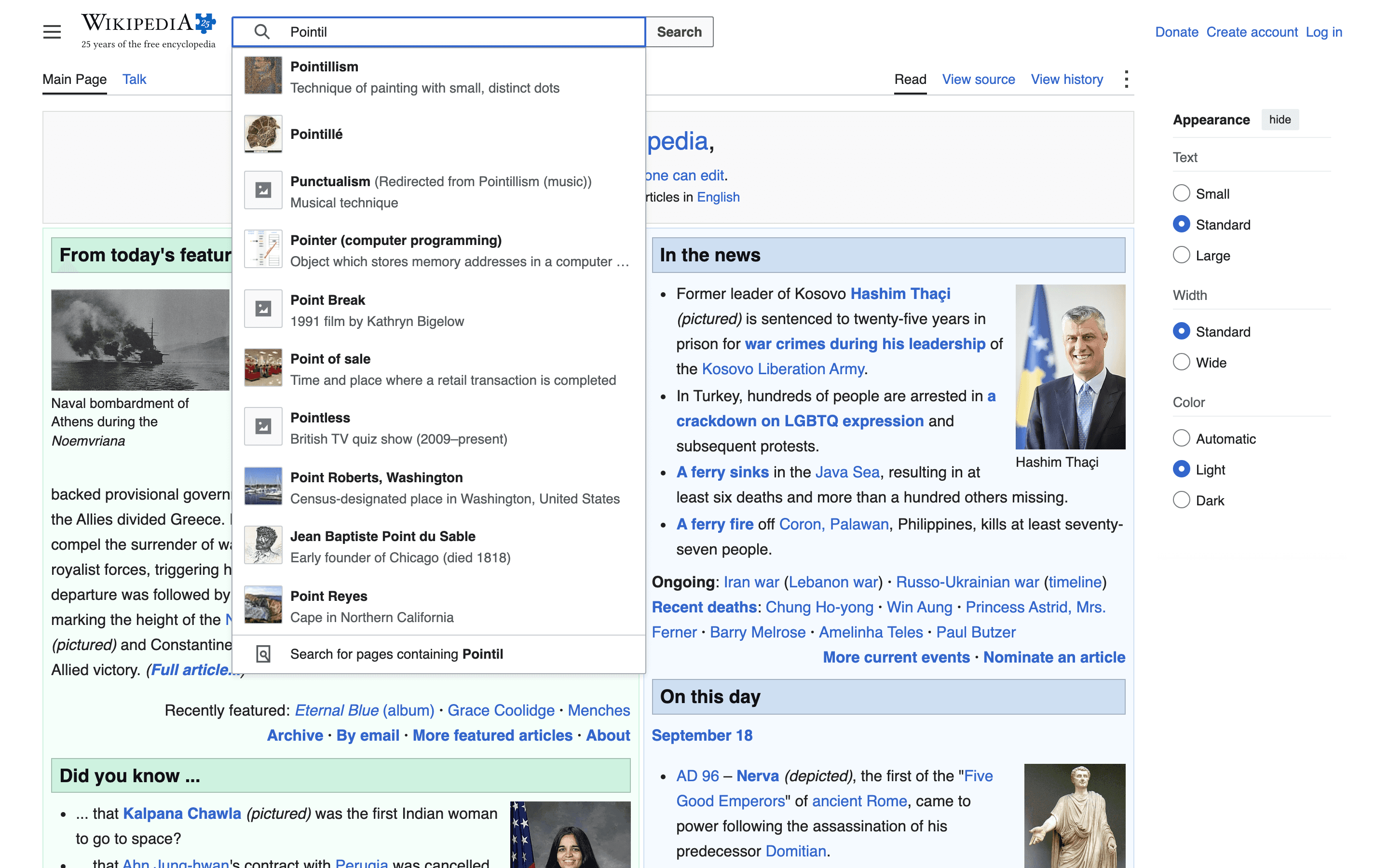
A sentence she does not want to take on trust
Maya is writing about late-19th-century technique and has a claim she needs to attribute. She starts where every reader starts — the search box — and the site offers completions before she has finished the word.
/wiki/Main_PageThe lead tells her what, but not who says so
The opening paragraphs define the term and name the painters. Useful for orientation, useless for a citation — the lead deliberately summarises the body rather than sourcing it.
/wiki/Pointillism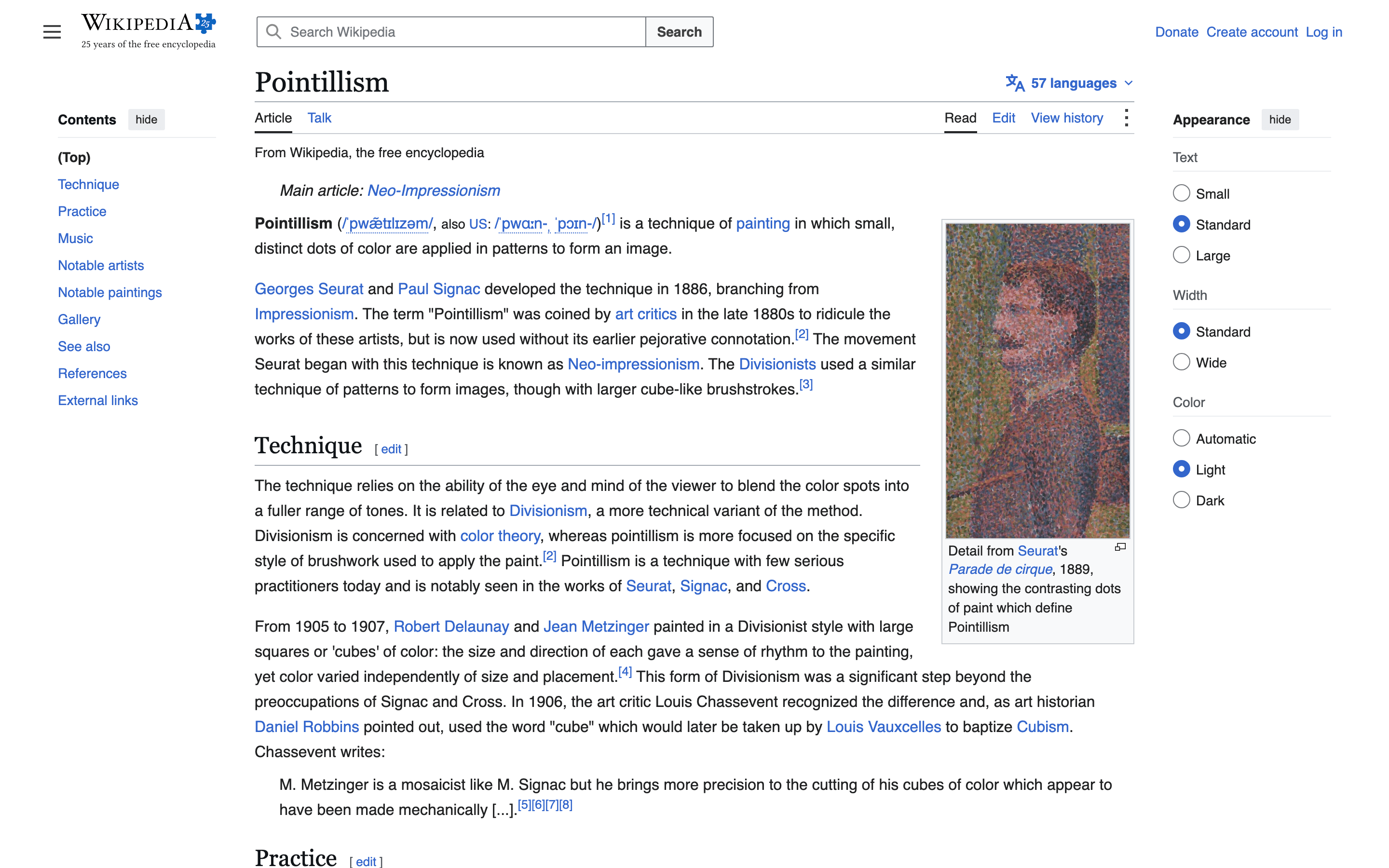
A numbered marker, and a preview on hover
Every sourced statement in the body carries a bracketed number. Hovering one raises a preview of the reference without leaving the paragraph, so she can judge whether it is worth following before she loses her place.
/wiki/Pointillism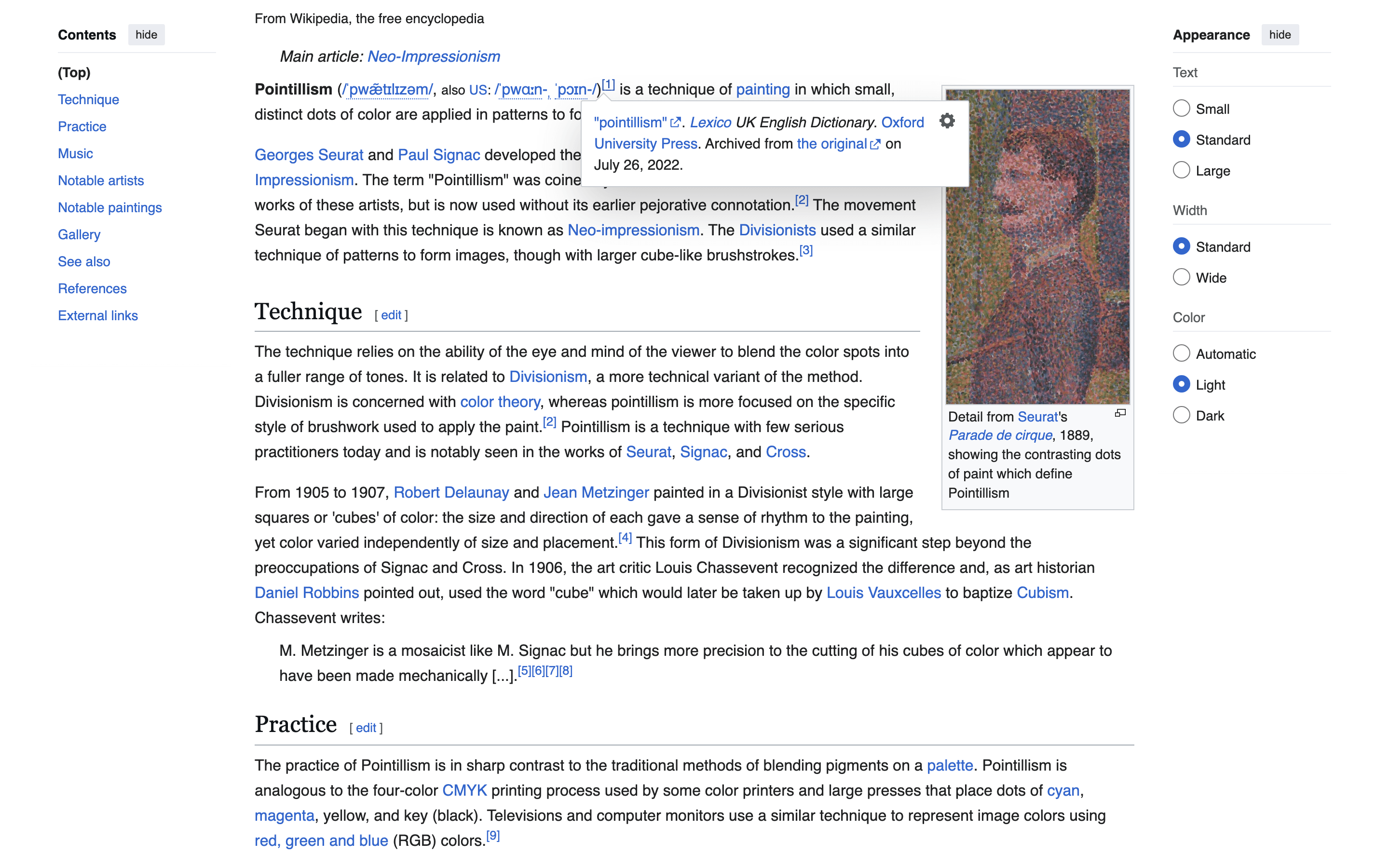

Illustration
“I’m checking the footnotes now; the article’s claims matter less than where they lead.”
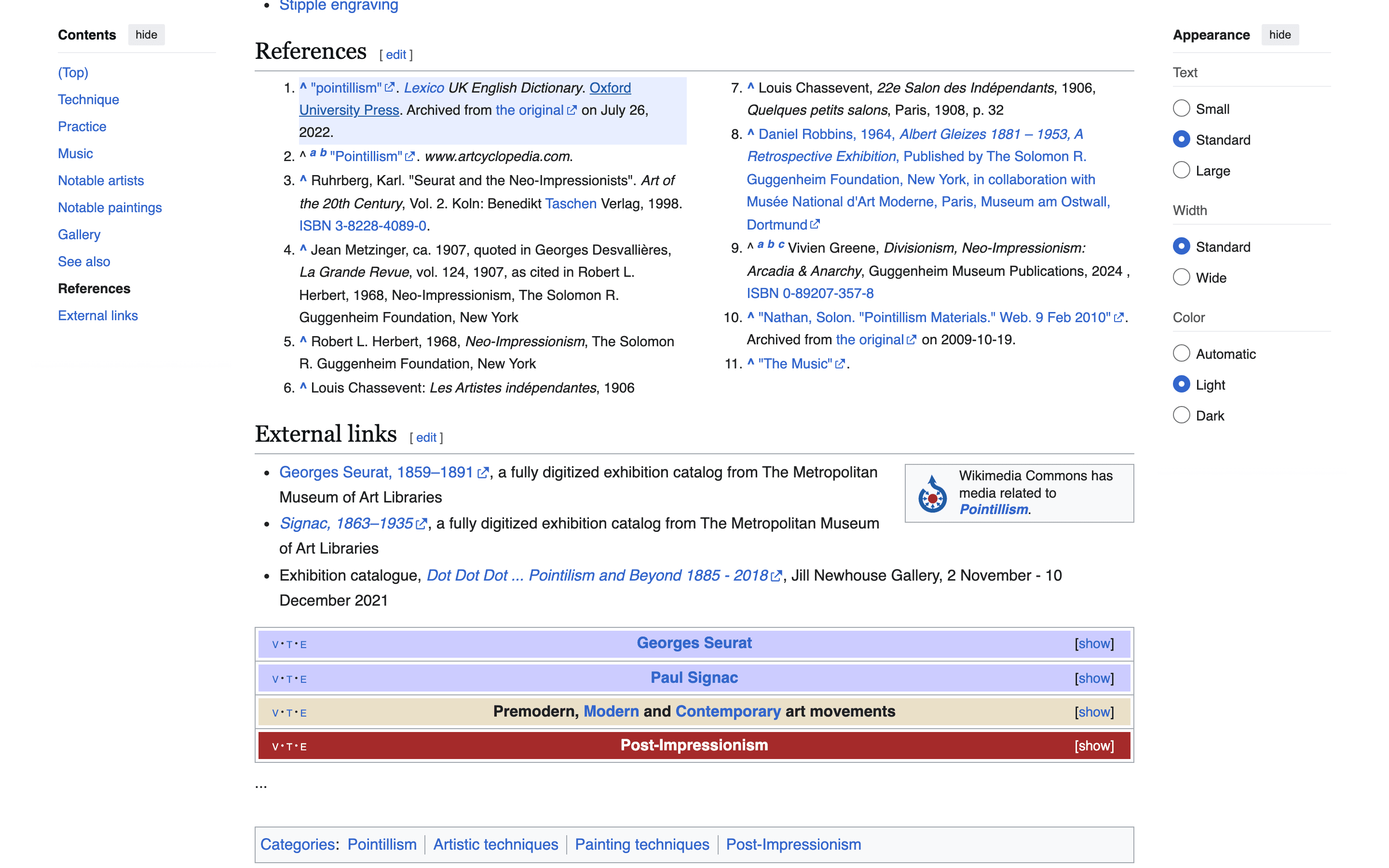
The footnote lands her in the reference list
Clicking the marker jumps to the numbered entry at the foot of the article and highlights it. This is the end of Wikipedia's own responsibility and the start of hers: the entry is a pointer to a book or a paper, not the evidence itself.
/wiki/Pointillism#References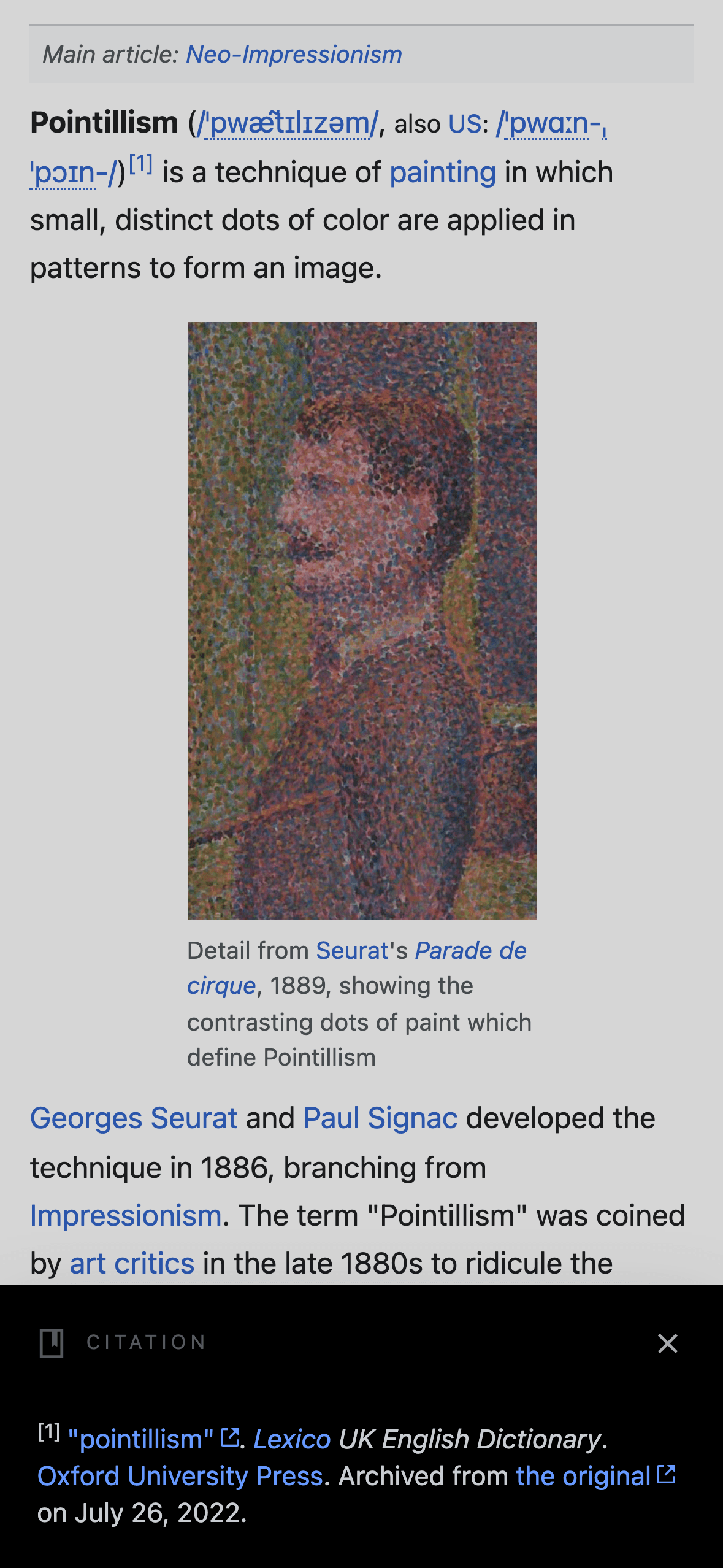
On a phone the same footnote slides up instead
Later, away from her desk, she checks a second claim on her phone. The mobile skin answers the same tap differently — the reference rises in a drawer over the article rather than scrolling her to the bottom of it, so she keeps her place in the sentence.
en.wikipedia.org/wiki/Pointillism
Illustration
“I find the original article, then check its references before deciding what to read.”
The payoff
Four taps from an unattributed sentence to a named source, without ever losing her place in the paragraph.