Editor
Reading the argument behind the article
The article is the output. For someone who maintains one, the interesting surfaces are the ones readers never open: the revision list, the word-level diff, and the page where the disagreement is recorded.

Illustration
“I check the talk page first to understand why editors disagree about this change.”
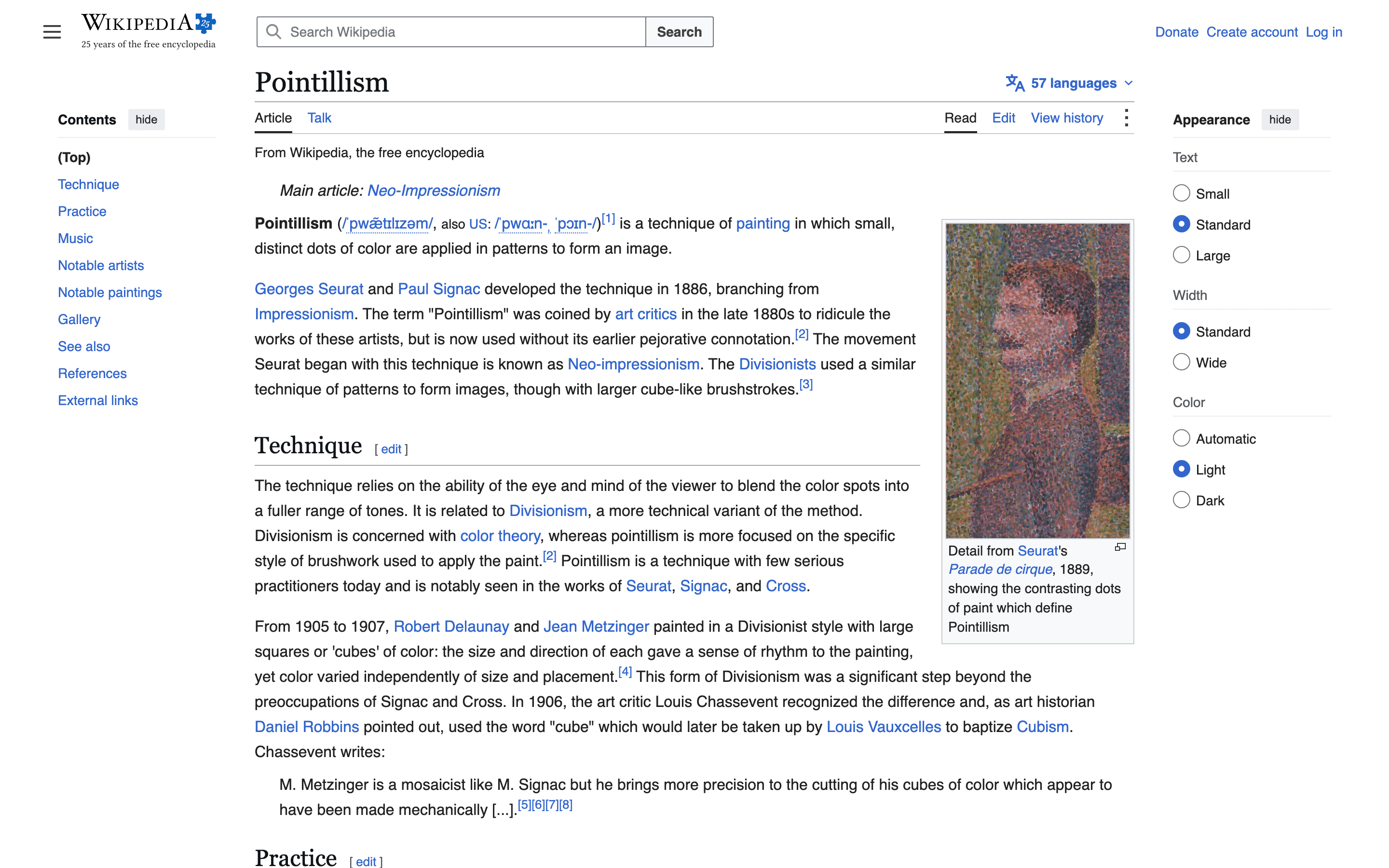
The version the world is reading
Tom watches this article. What he sees first is what everyone sees — the current published revision, with no indication on the page of how contested or how recent any of it is.
/wiki/PointillismEvery edit, with a name and a reason attached
The history is the article's real content: a dated list of revisions, each with an author, a byte delta, and an edit summary. Nothing here is anonymous to the system, and nothing is deleted — only superseded.
/w/index.php?title=Pointillism&action=history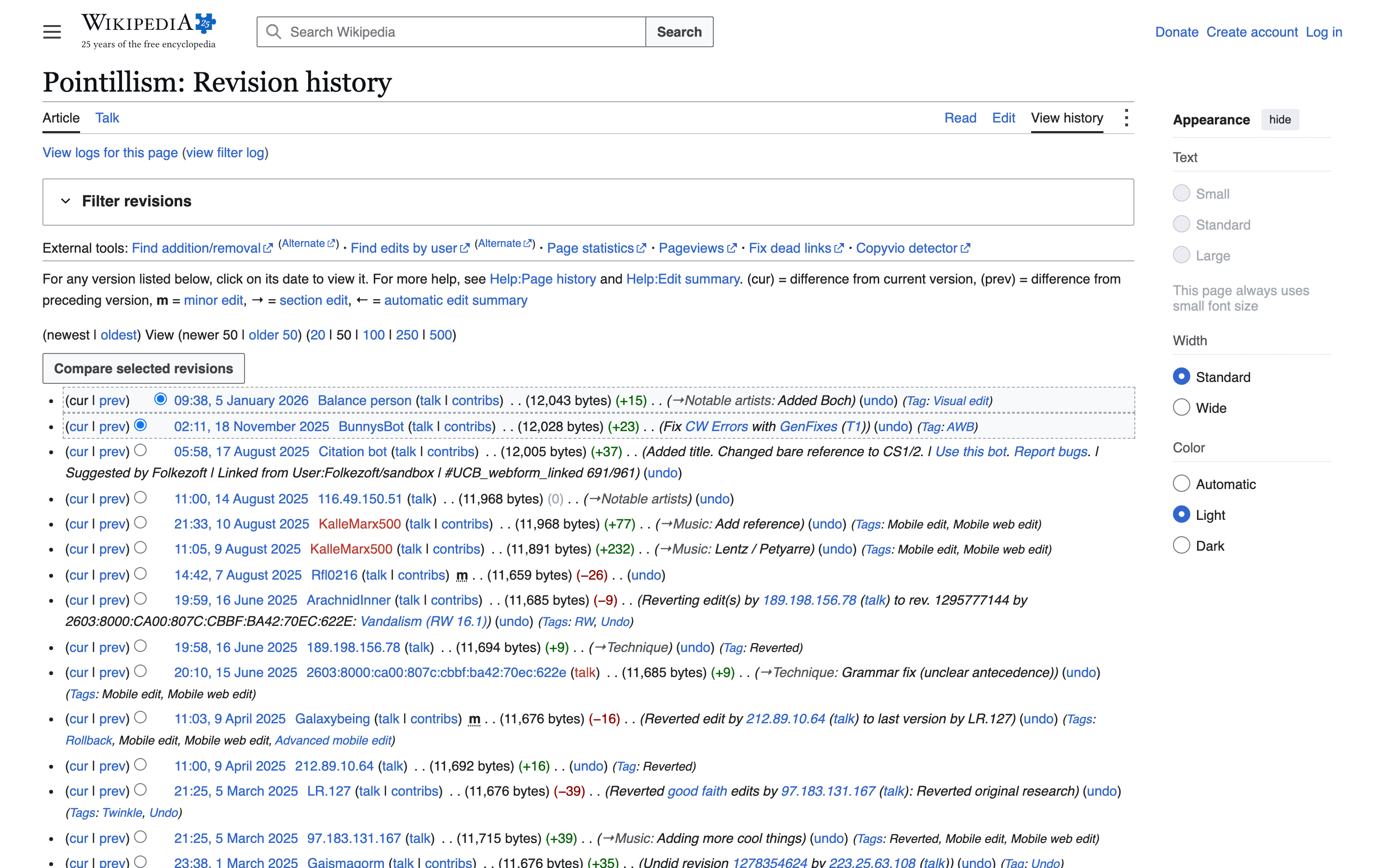
Two revisions, picked by hand
He marks the current revision and one from a few edits back. The radio columns enforce direction — you cannot compare a revision with itself, and the older column locks out everything newer than your pick.
/w/index.php?title=Pointillism&action=history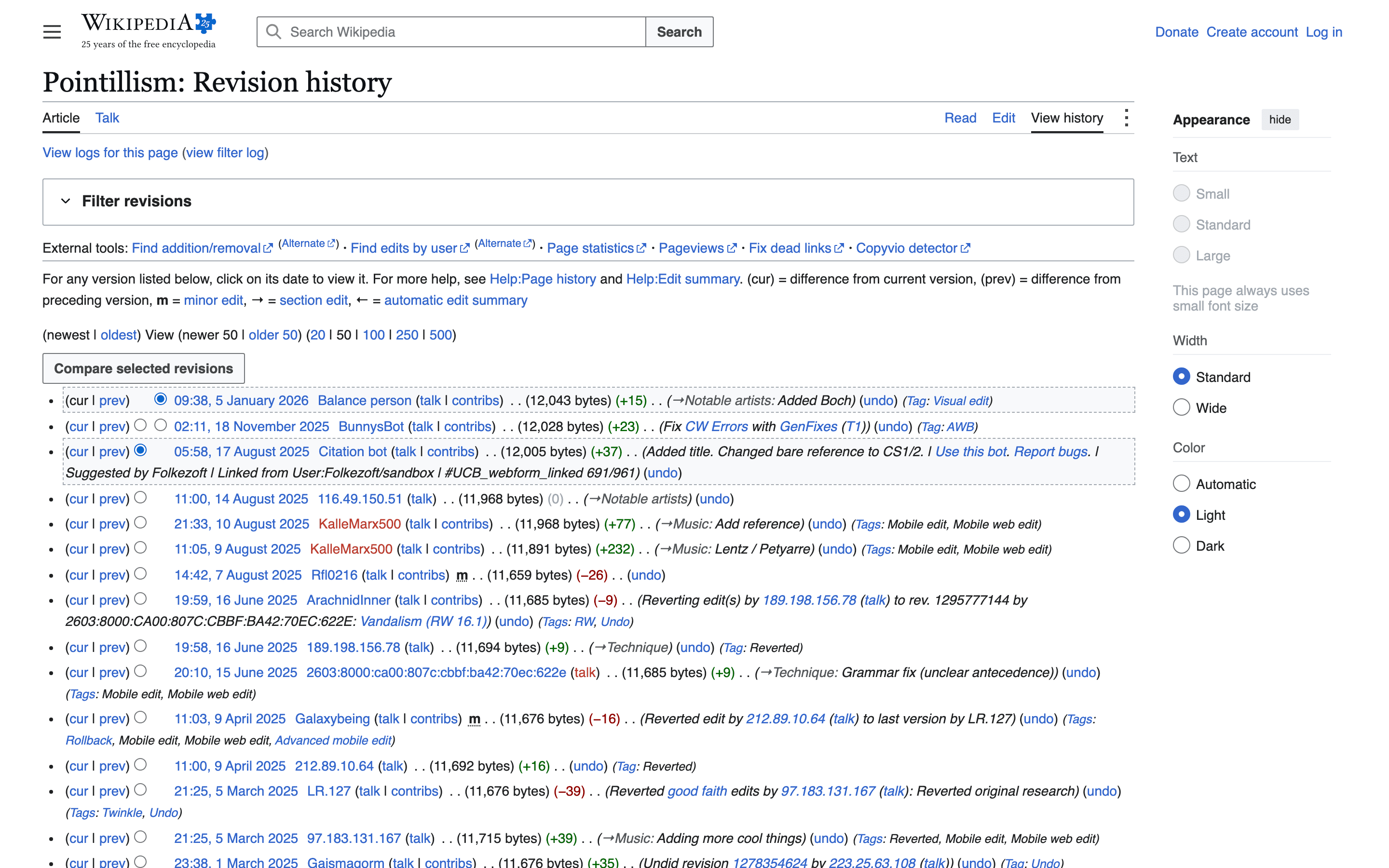

Illustration
“I compare sources, revisions, and talk-page arguments before deciding whether the change holds up.”
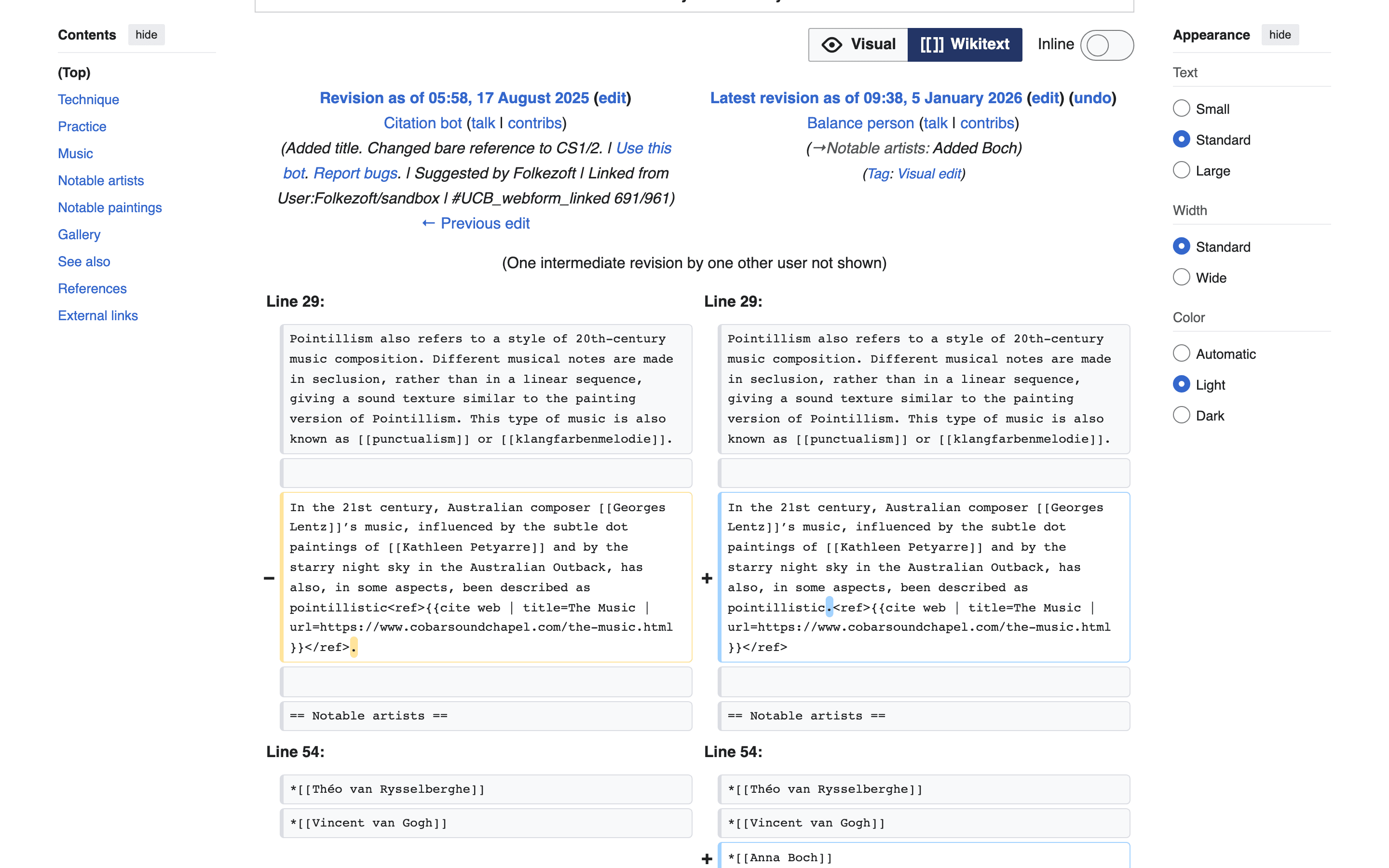
The change, down to the word
The comparison is not a file diff — it highlights the changed words inside the changed sentences, so a one-word substitution in a long paragraph is visible immediately instead of being buried in a wall of identical text.
/w/index.php?diff=…&oldid=…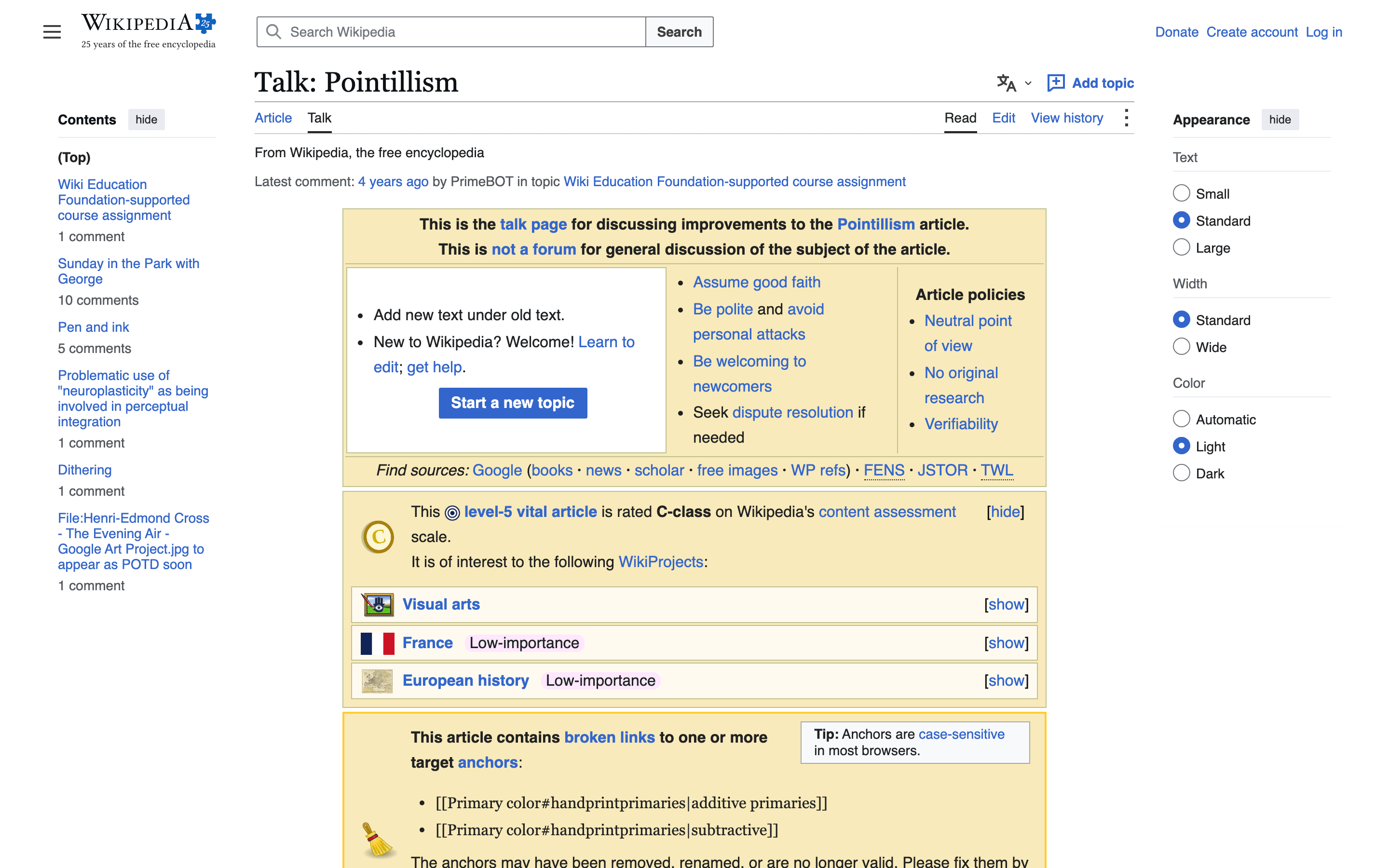
The disagreement has its own page
Edits that need justifying get argued on the talk page rather than in the article. For Tom this is the difference between reverting a change and understanding it — the reasoning is a click away from the text it produced.
/wiki/Talk:Pointillism
Illustration
“I leave with the reasoning behind the edit, not just the article’s current wording.”
The payoff
He can see exactly which words changed, who changed them, and the reason they gave — without leaving the article's own namespace.