Webreading

Reading an article

/wiki/Pointillism

A document with apparatus, not an app with content

The page a reader actually came for. The lead answers first; contents, inline citations and the other-language versions sit around it without competing for attention.

  1. 01

    Lead section first, apparatus around it

    Opened /wiki/Pointillism.

    The lead answers the question before any navigation appears. Contents, references and language links are all present but subordinate — the page is a document with apparatus, not an app with content in it.

    /wiki/Pointillism
    /wiki/Pointillism
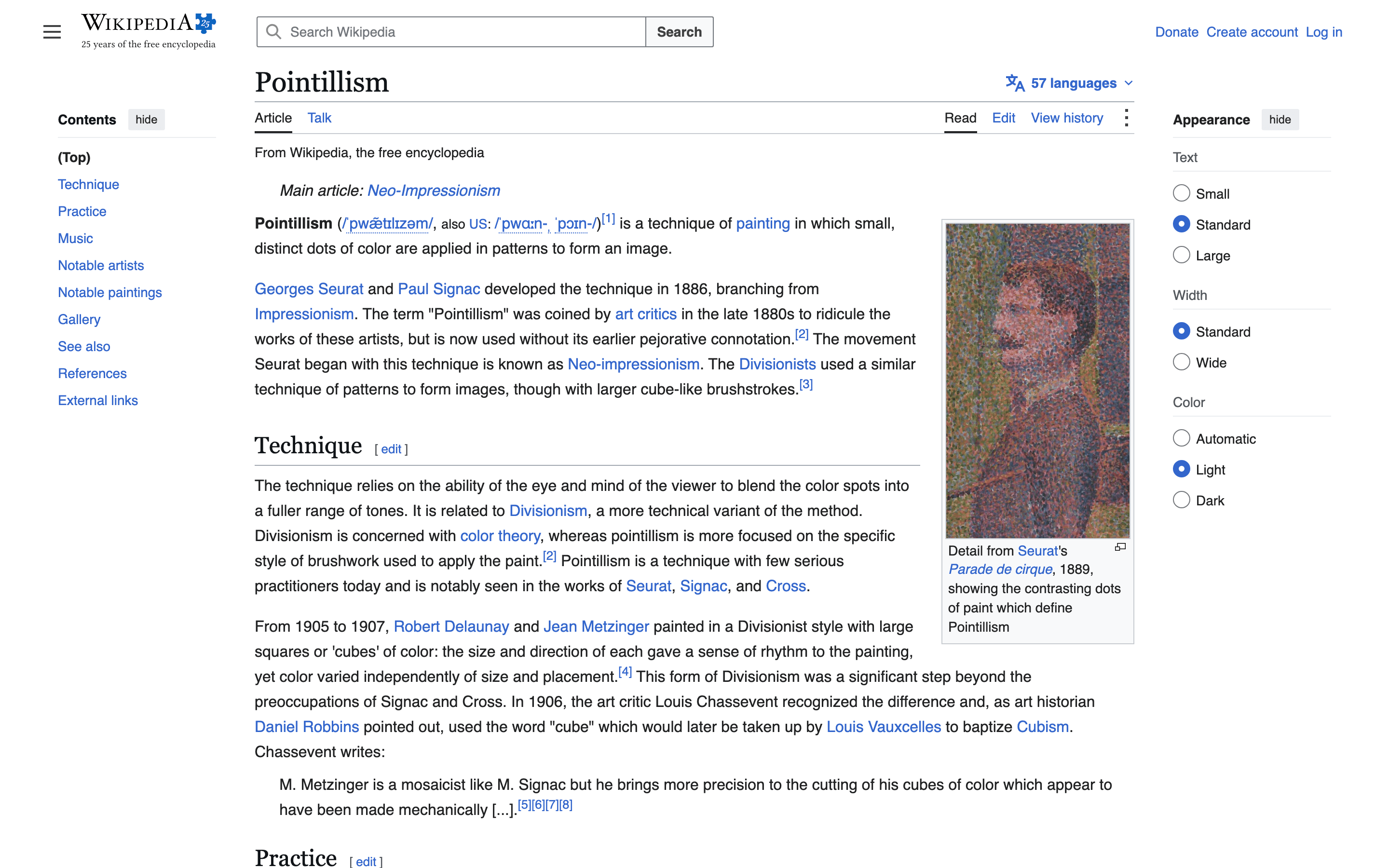
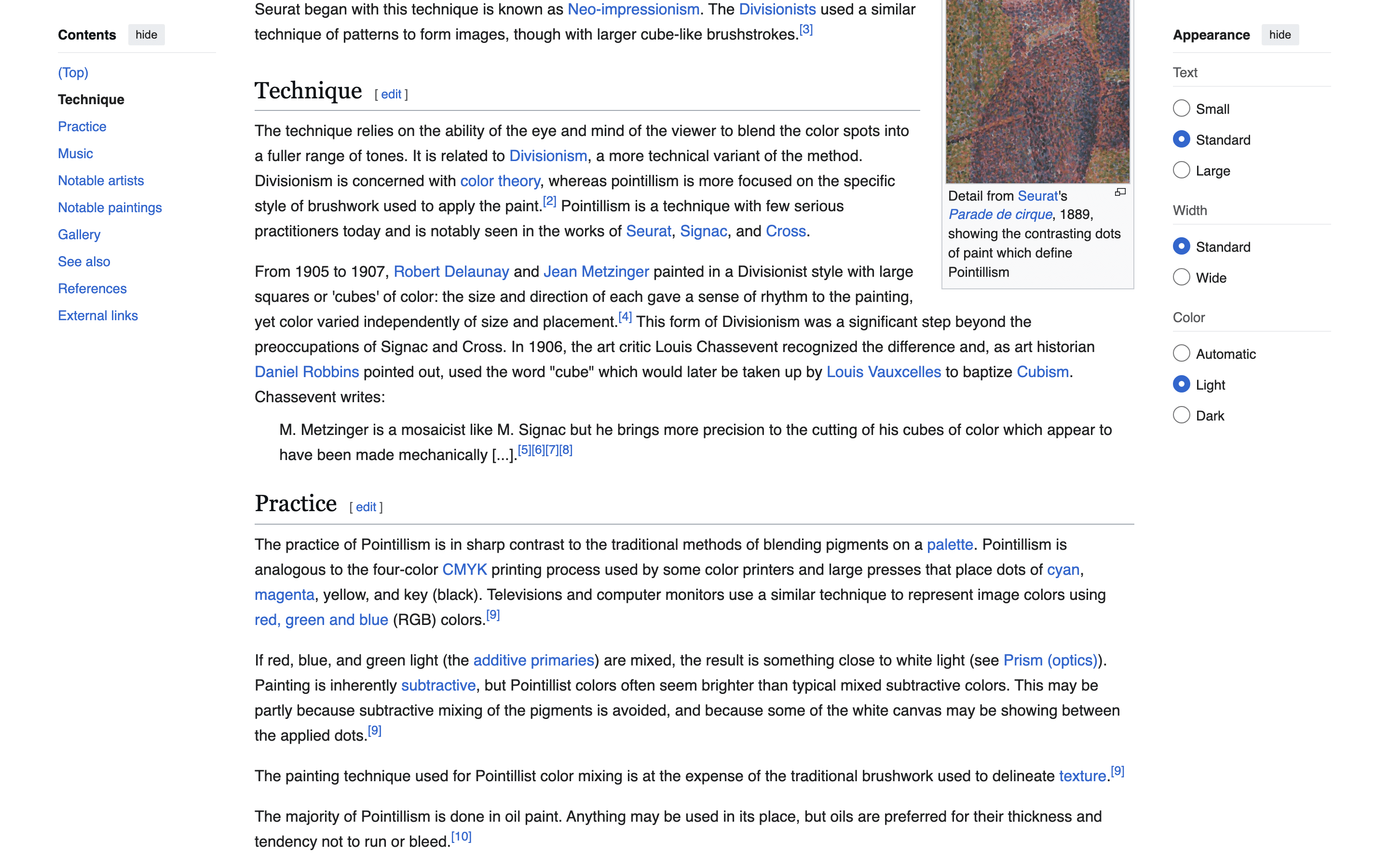
    The lead section of the Pointillism article
  2. 02

    Sections carry their own citations

    Scrolled to the first substantive section.

    Every claim is footnoted at the point it's made rather than in a bibliography at the end. On a long article that's the difference between a reader being able to check one sentence and having to trust the whole page.

    /wiki/Pointillism
    /wiki/Pointillism
    A body section of the article with inline citations
  3. 03

    The same article, in every language that has one

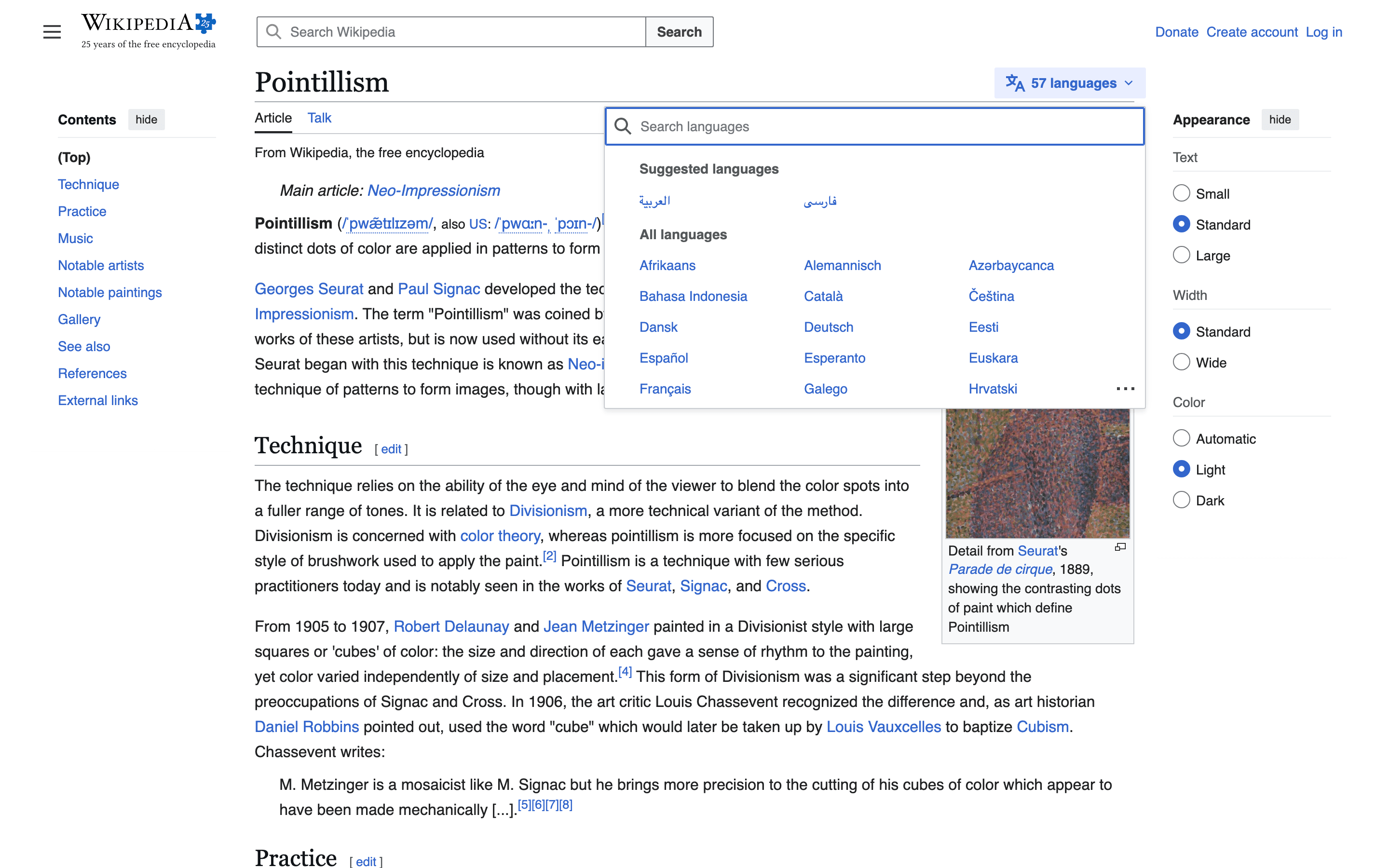
    Opened the language selector.

    Each language is a separate article with its own editors and its own revision history, not a translation of the English one. They're linked as siblings rather than derived from a source — which is why the list is a navigation surface and not a locale toggle.

    /wiki/Pointillism
    • Captured as a step inside this feature, not as a separate `article-fr` feature. A locale is an axis through a feature; cataloguing it separately would inflate the feature count without documenting anything new.
    /wiki/Pointillism
    The language selector listing other-language versions

Worth knowing

  • Each language version is an independent article with its own history — the language list is navigation between siblings, not a translation switch.