Journey
From one request hop to a timed system-design interview
Maya uses System Designer as a progression: learn one causal model, stress it with real capacity numbers, and then explain a related design under interview conditions.
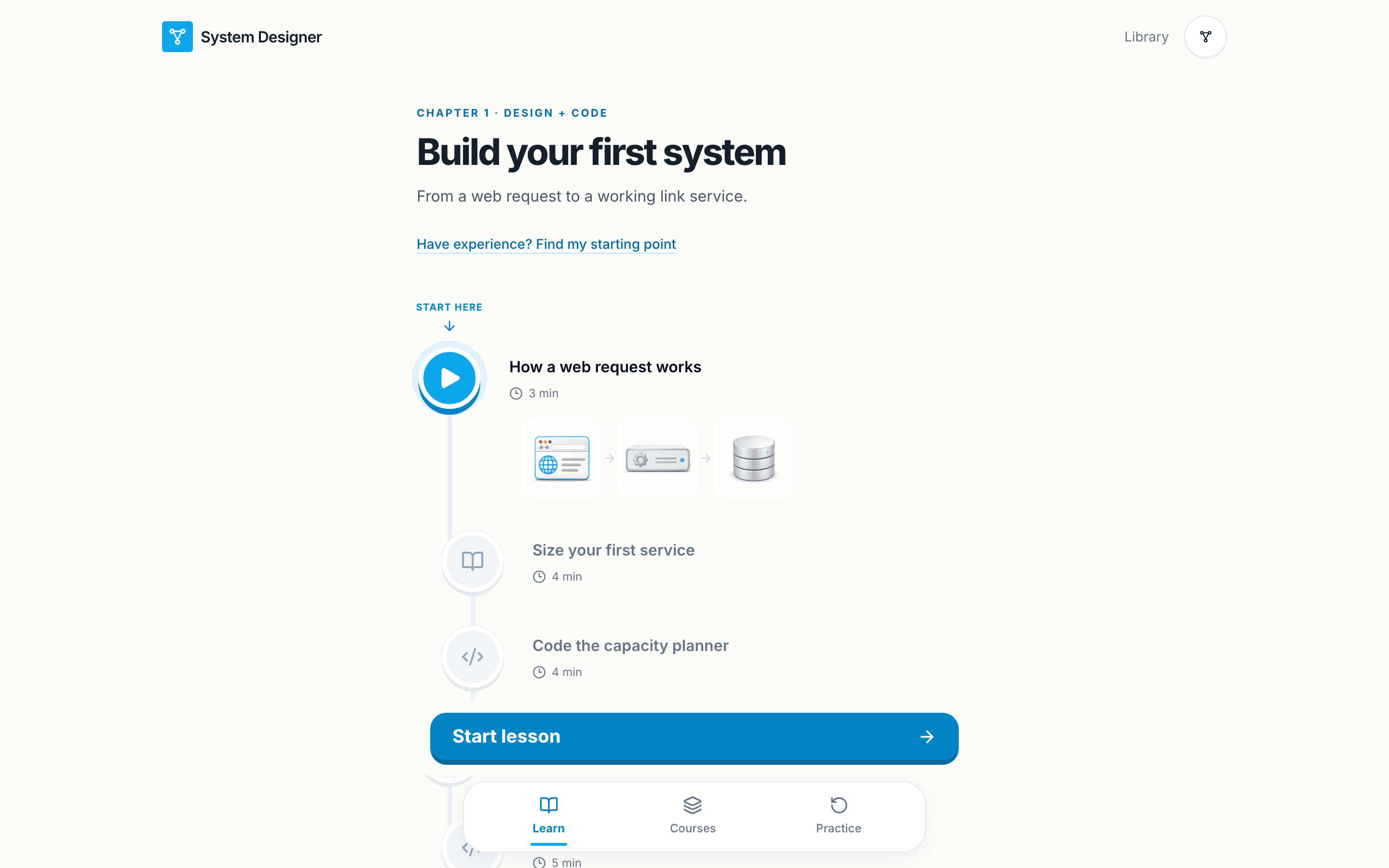
Maya starts with today's plan
Maya is a frontend engineer moving toward senior roles. She needs a tractable path through system design, not another unranked reading list. The daily plan gives her one chapter and a visible week.
/learnShe opens the smallest useful lesson
The first lesson is only three minutes, but it names the browser, service, and database as one system. That is small enough to begin and concrete enough to rehearse.
/learn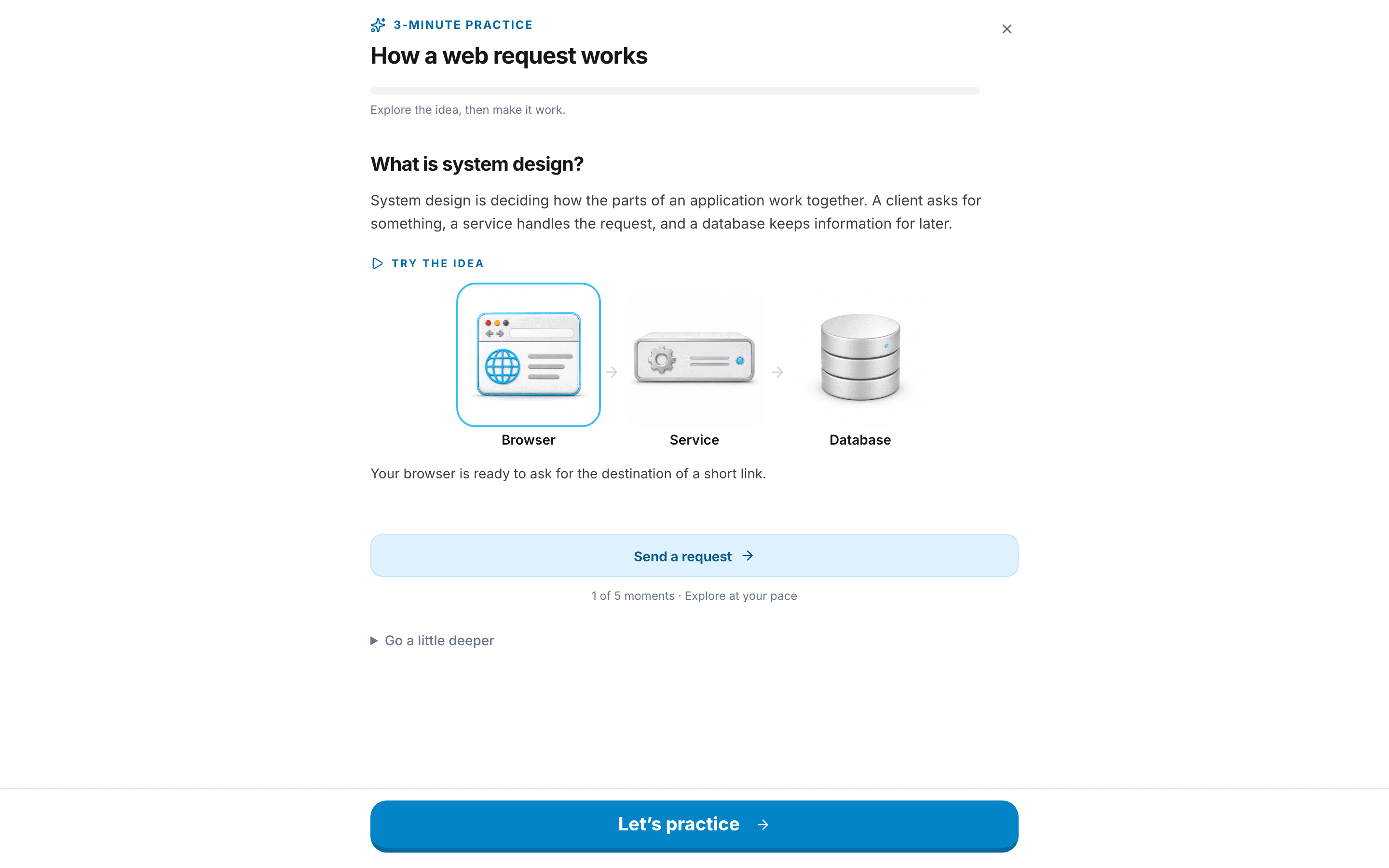
She watches causality, one hop at a time
The diagram advances to moment two of five. Maya is not memorising a static architecture; she is following what actually happens after a user action.
/learn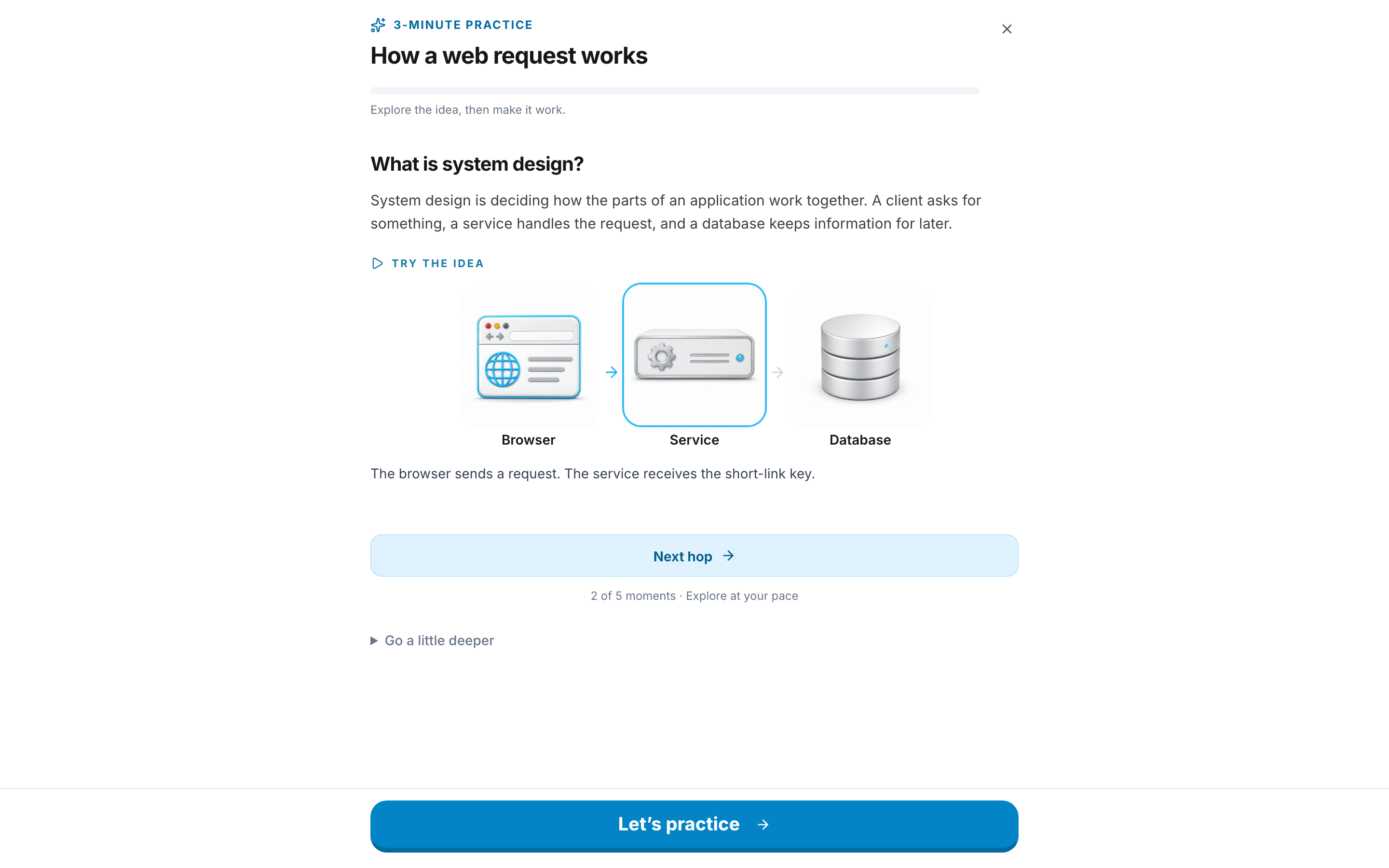
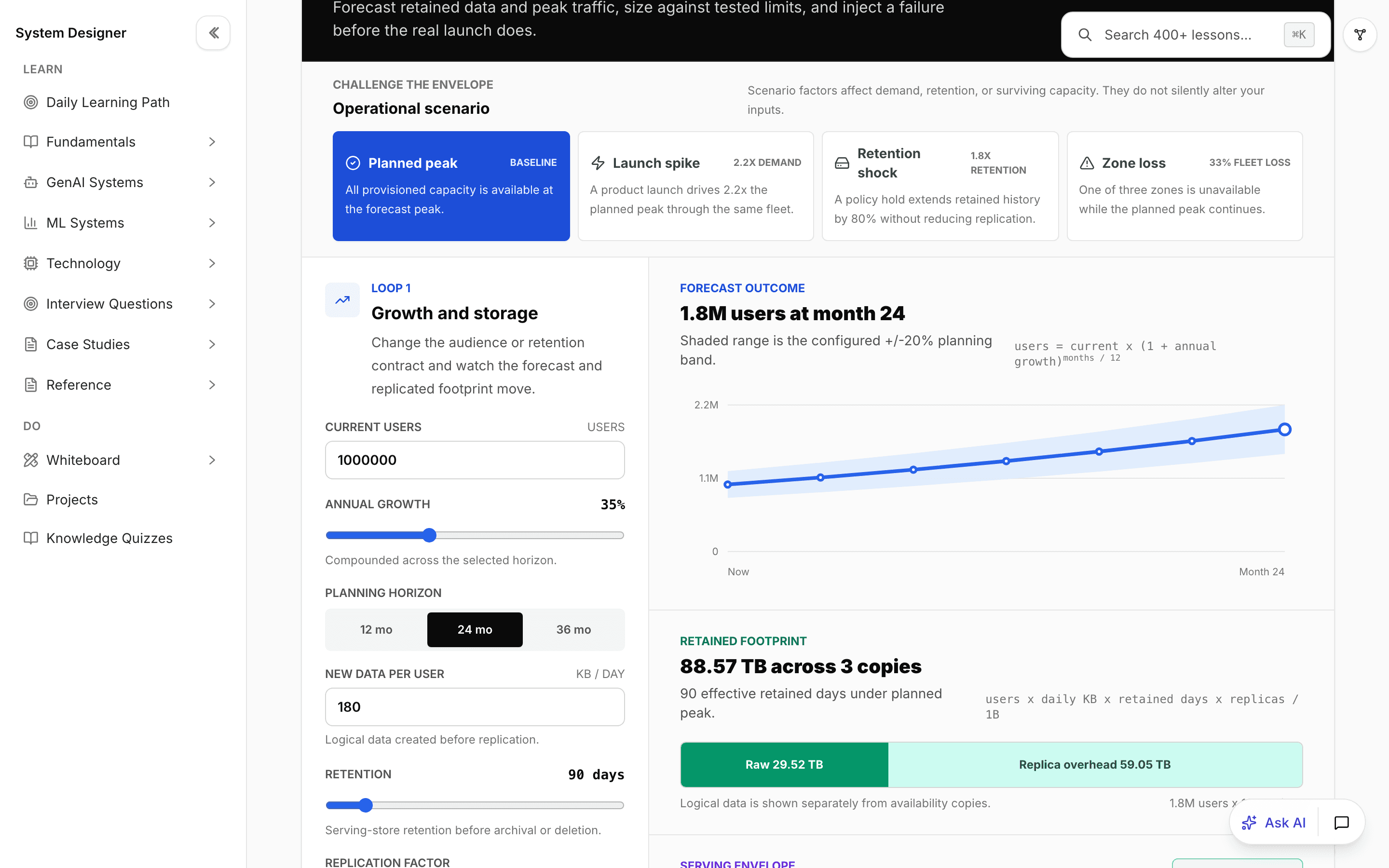
The lesson turns into an operating model
Next she opens the capacity control room. Users, storage, RPS, instances, headroom, and cost put numbers behind the boxes she just learned.
/tools/capacity-planning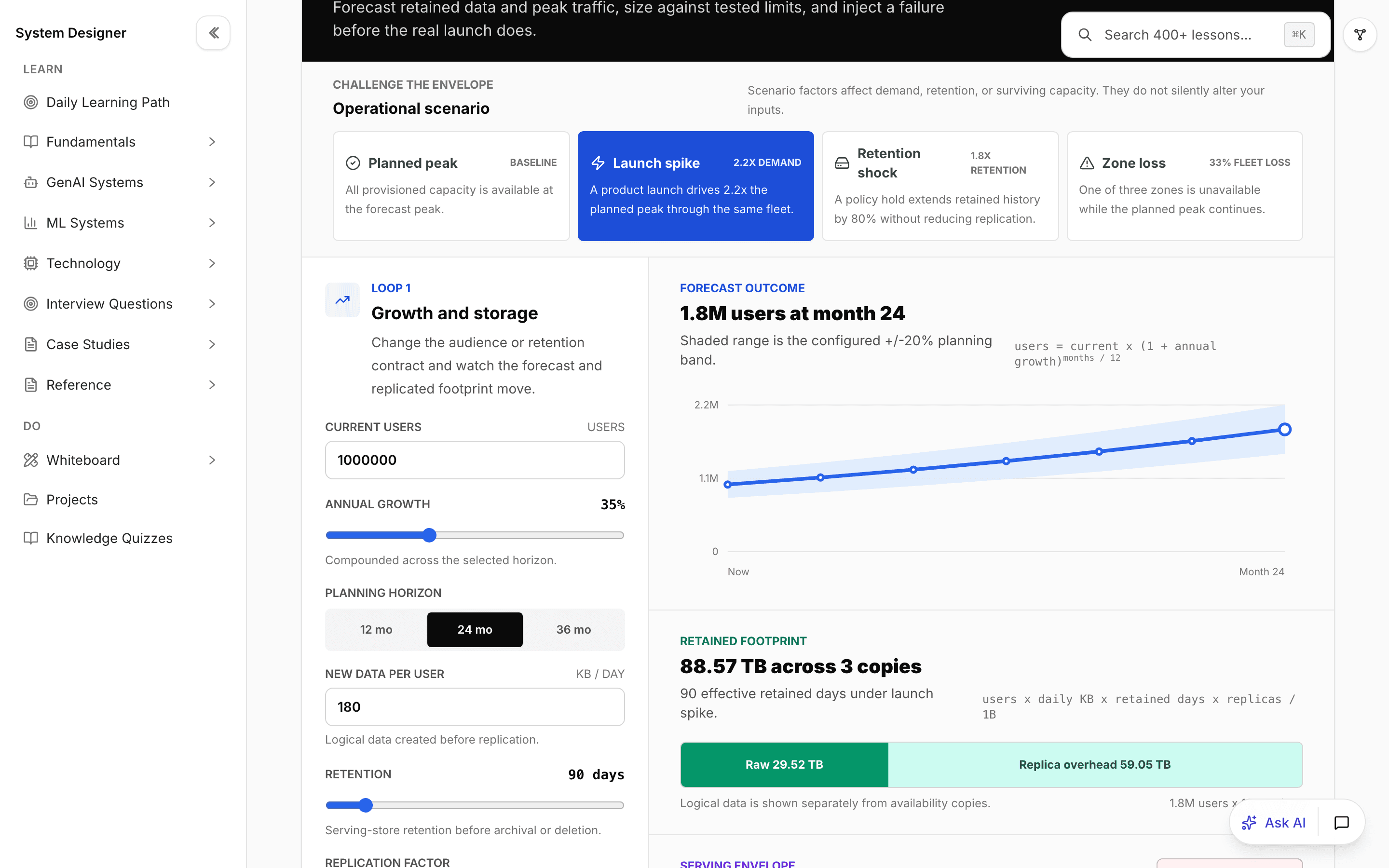
She breaks the happy-path forecast
A launch spike drives 2.2 times the planned peak through the same fleet. The changed RPS is the moment a design assumption becomes an interview talking point.
/tools/capacity-planning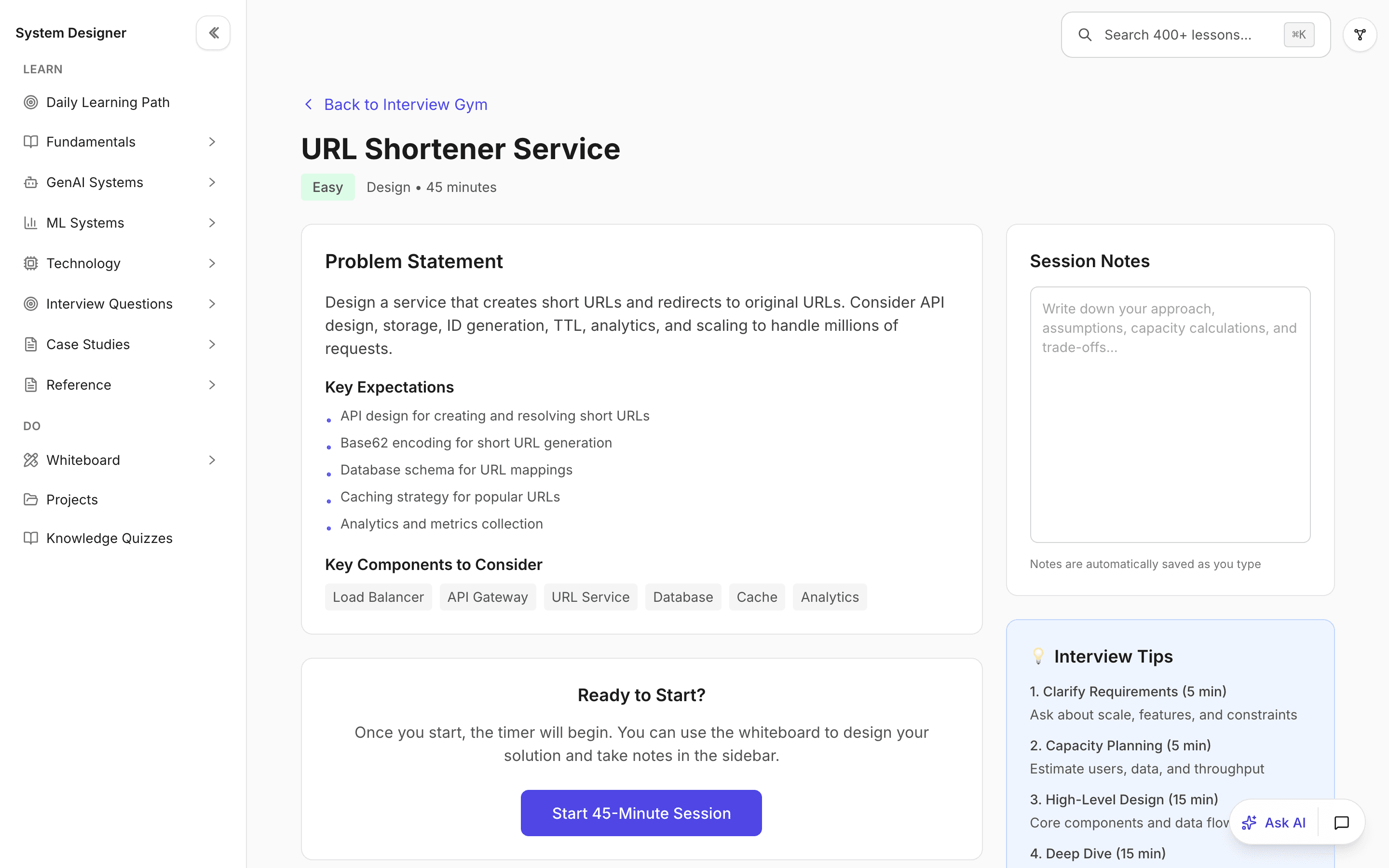
She chooses the URL shortener rehearsal
The interview brief gives Maya a problem statement, expectations, components, notes, and tips. Her earlier request path and capacity model now have somewhere to be used.
/gym/url-shortenerThe timer starts; preparation becomes practice
Maya starts the 45-minute session with the rubric and working notes in reach. The payoff is not another completed article: it is a realistic rehearsal where she can explain the system under time pressure.
/gym/url-shortener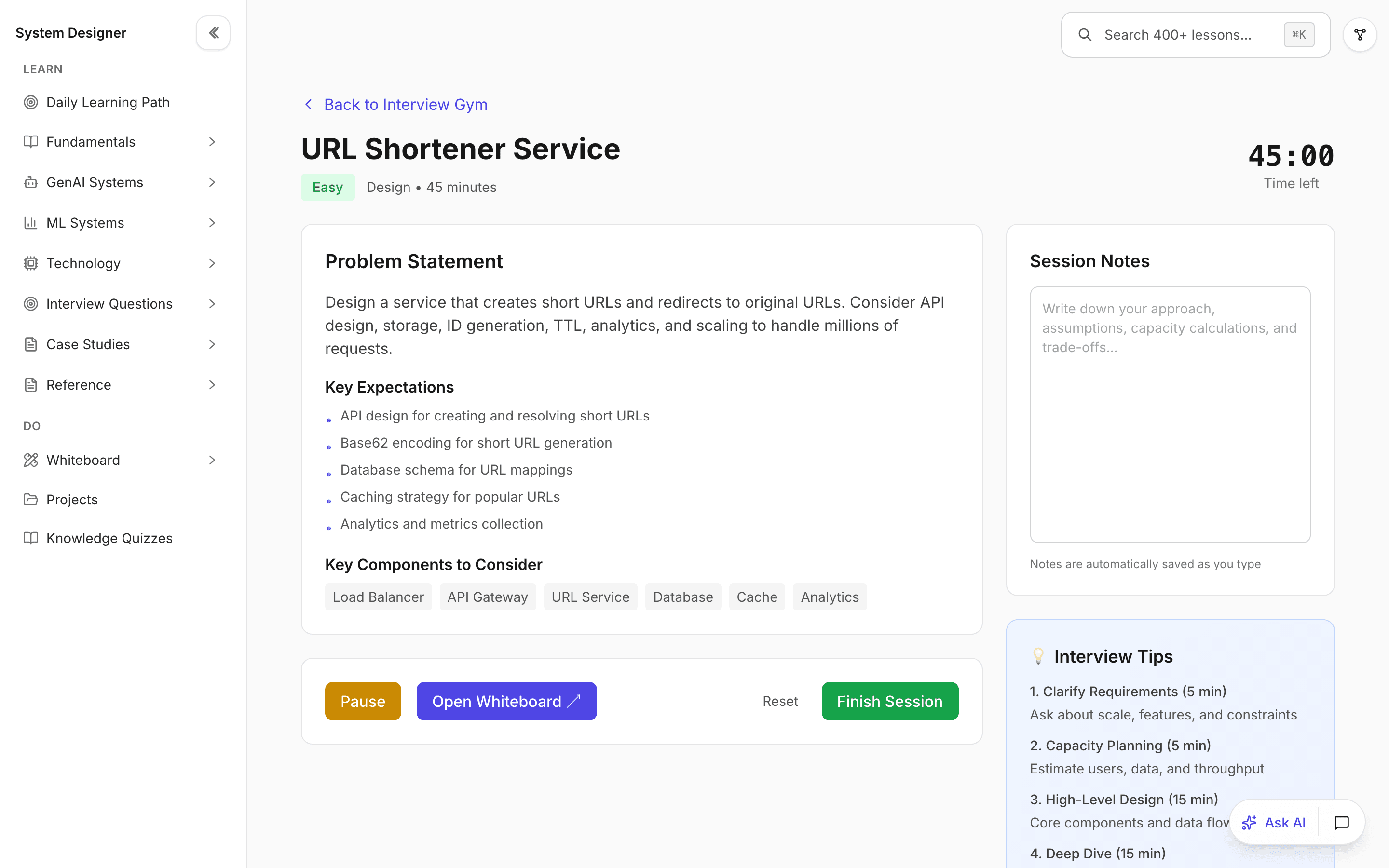
The payoff
She begins a timed URL-shortener design session with a request model and capacity language she has just practised.