Journey
From a shared link to reading the thing, with nothing in between
The Reader is handed a URL and opens it on a phone. Openstage's job for her is entirely negative — no account, no install, no controls to learn — and the journey is worth walking precisely because a product that does its job this way leaves nothing to screenshot except the absence of obstacles.

Illustration
“I open the link to see the deck everyone is discussing.”
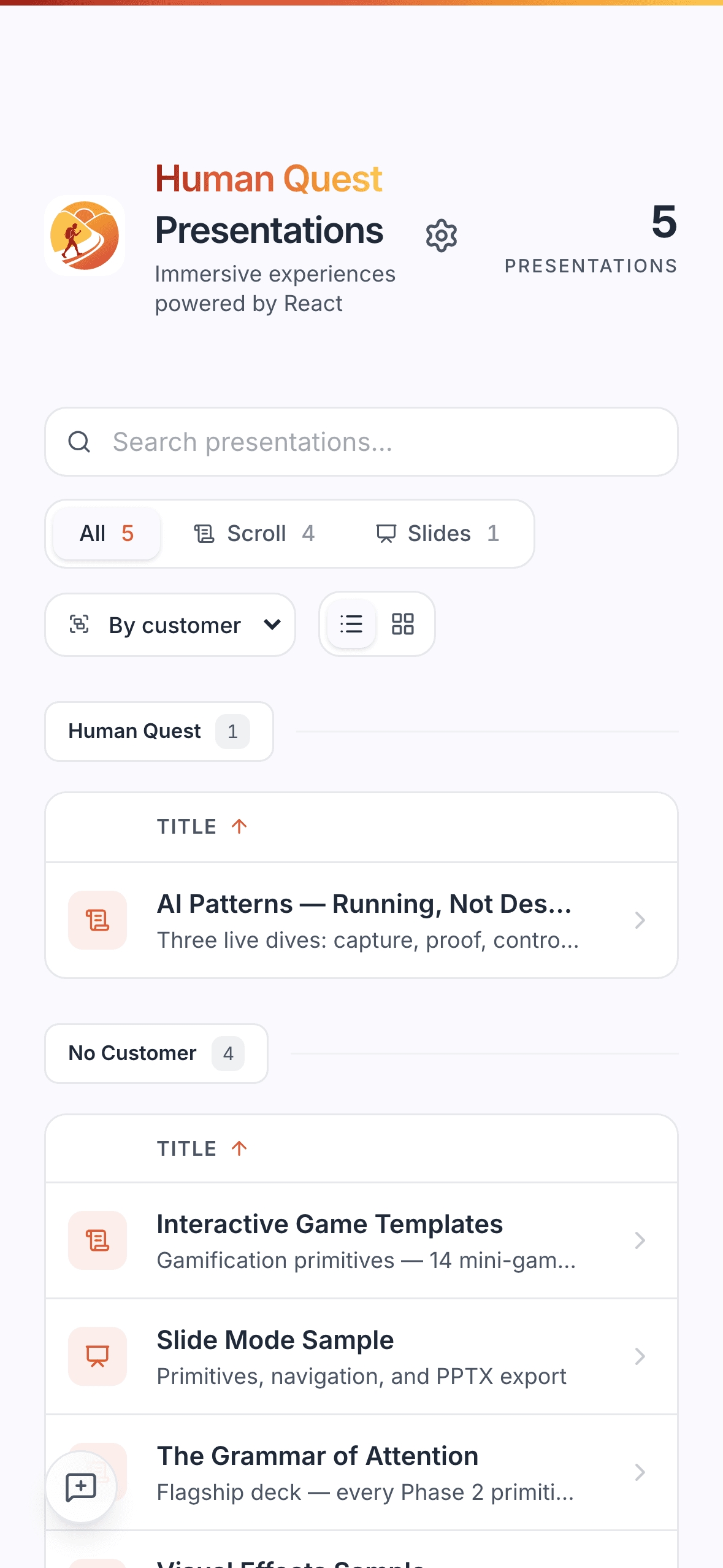
A link, on a phone, two minutes before the talk
She has the URL and nothing else — no account, no app, no sense of what she is about to open. The gallery loads to a list of four decks with their type and date, which is exactly enough to tell her she is in the right place and which of them is the one being presented.
/She taps the one with the interesting name
No login wall, no cookie banner, no app-install interstitial. The deck opens straight onto its hero and she is reading within a second of tapping — which is the entire product promise for somebody in her position.
/awwwards-flagship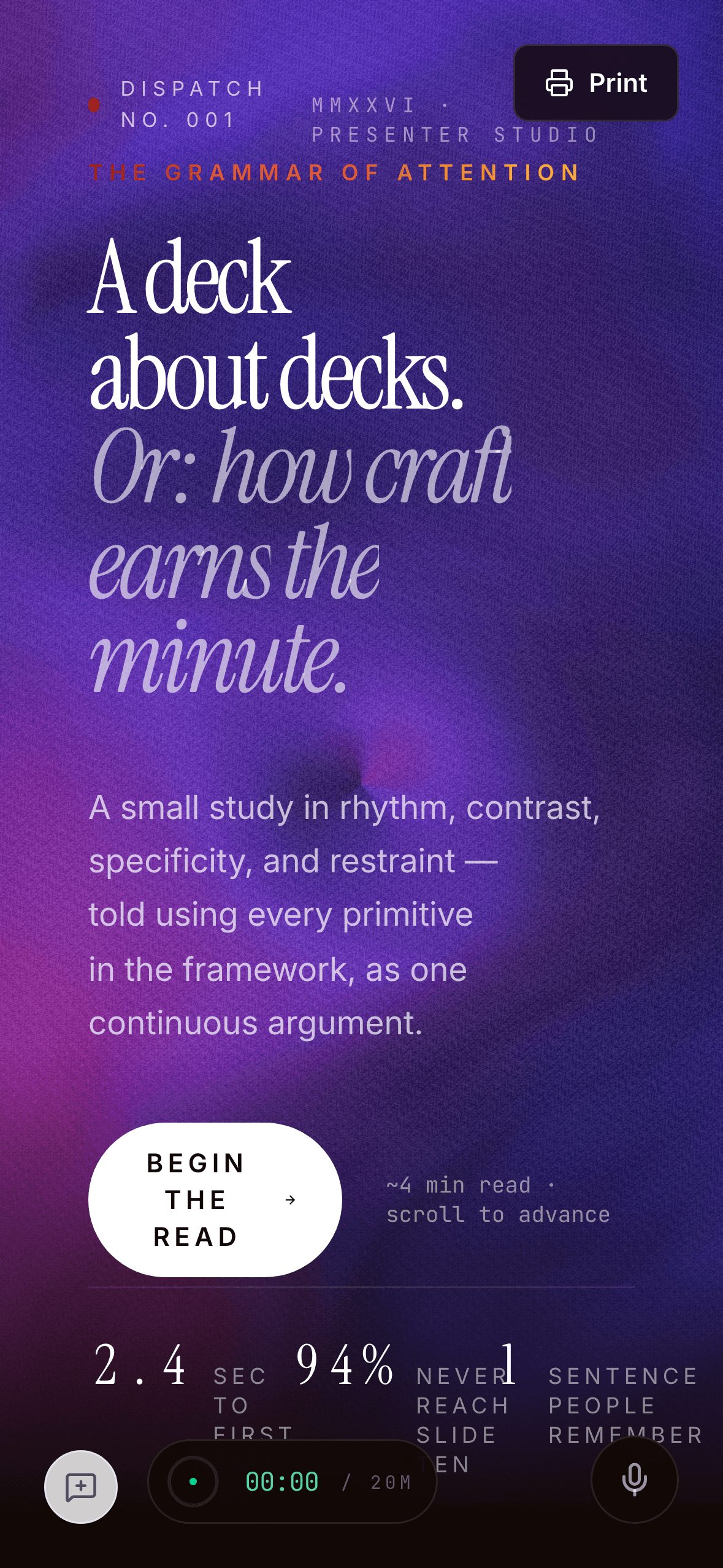

Illustration
“I can read the deck immediately and decide whether it answers my question.”
She scrolls, because there is nothing else to learn
A scroll deck has no controls: no next button to find, no slide count to track, no gesture to discover. She reads it the way she reads everything else on this phone, and the deck never asks her to do anything different.
/awwwards-flagship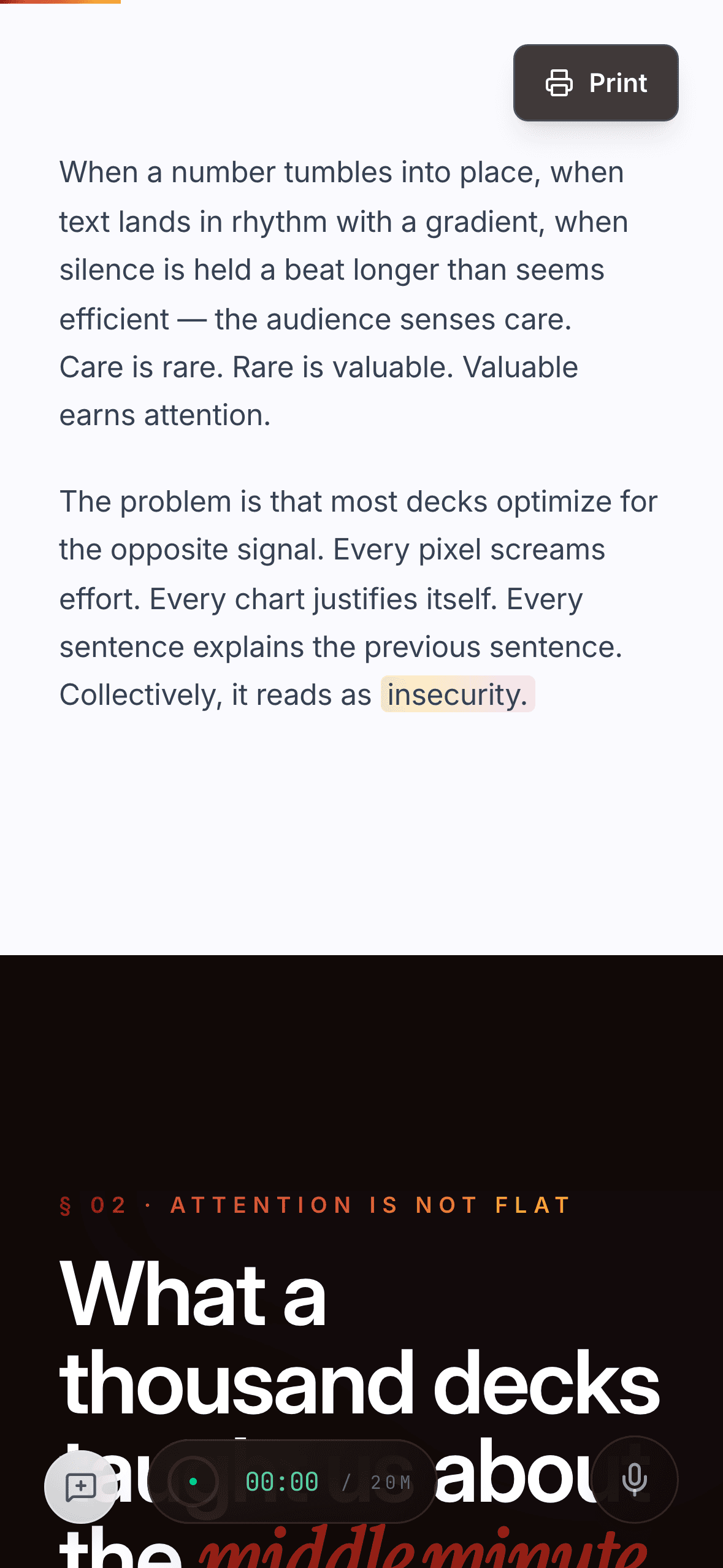

Illustration
“I open the link and find the deck already on the slide they mentioned.”
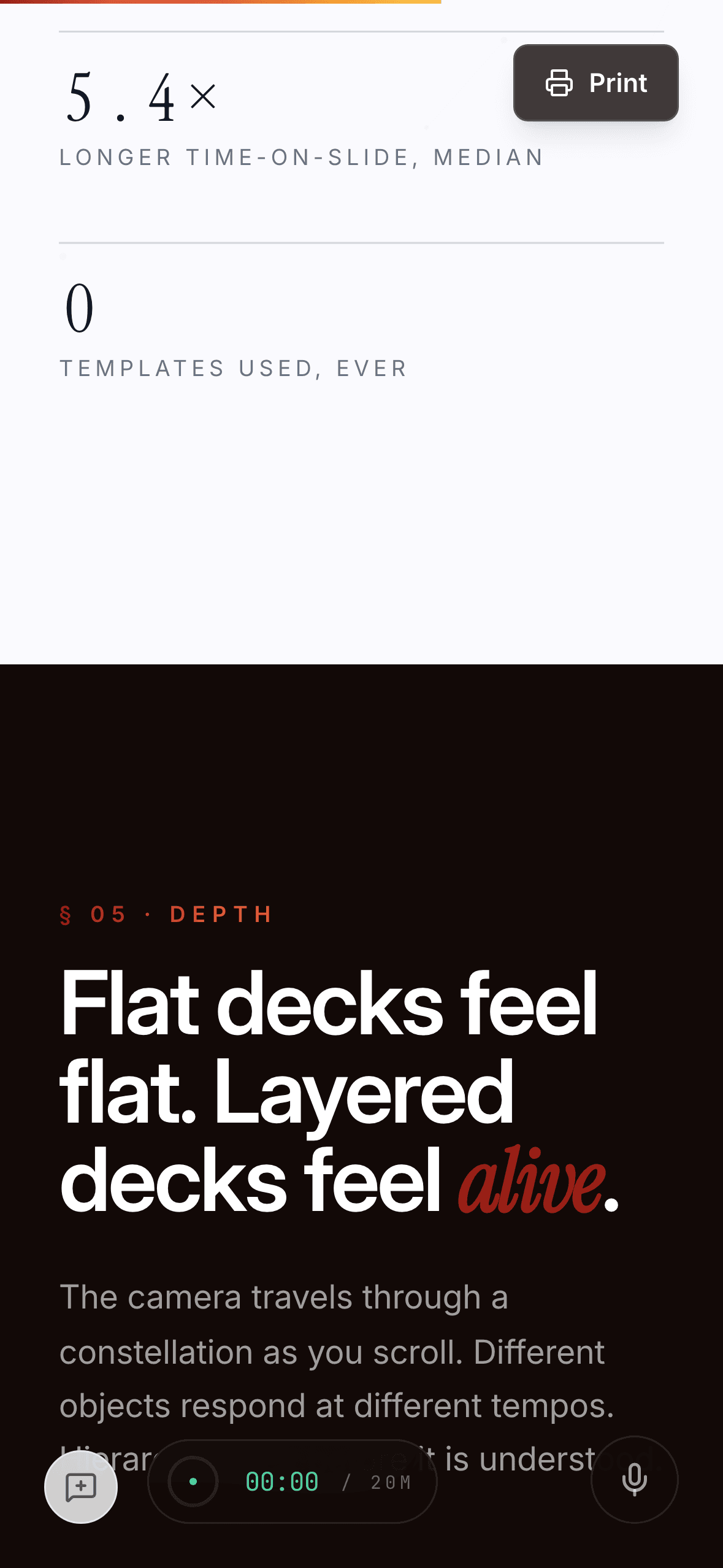
The format gets out of the way of the argument
By the middle of the deck, she is no longer thinking about Openstage at all. The page behaves like an essay on her phone: the next idea is always below the last one, and the visual rhythm tells her when the argument has turned.
/awwwards-flagship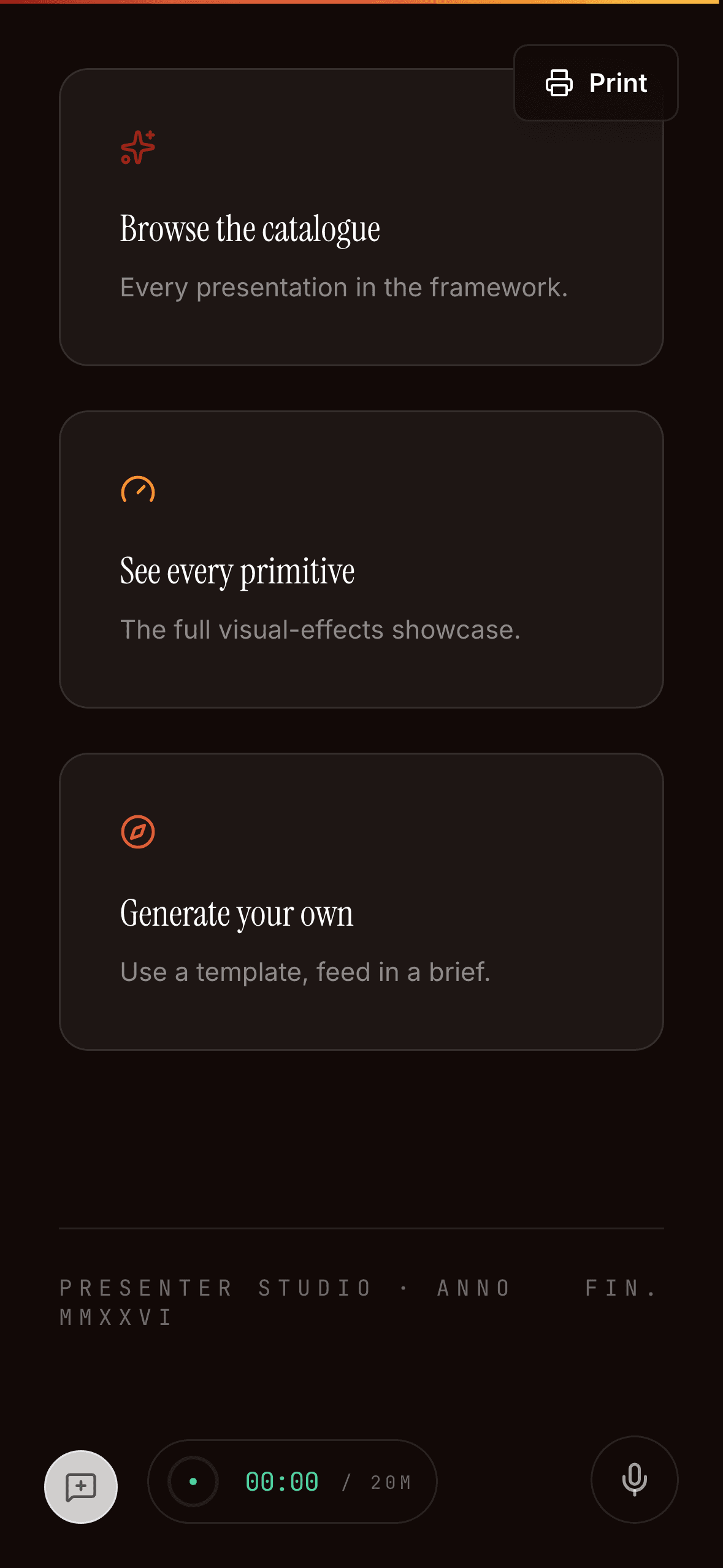
She reaches the close without losing her place
The final section arrives in the same continuous reading surface. There was no slide counter to manage and no mode to exit; she finishes with the talk's closing idea, not with a memory of the presentation software.
/awwwards-flagshipThe payoff
She opens, reads, and finishes the deck on her phone with no account and no presentation controls to learn.