Walkthrough
Webbiological interfaces

Trying audio-controlled experiments

/

Noah compares the three experiments and reaches their actual calibration, clap-detection, and game surfaces on the local build.

A live product-level walk for Breath Quest, framed around Noah Bennett's actual decision rather than a list of routes.

  1. 01

    The project is explicit about being an experiment

    Opened the local Breath Quest build.

    Three hypotheses separate breath detection, clap patterns, and a playful sound-controlled runner instead of pretending one sensor already solves everything.

    /
    /
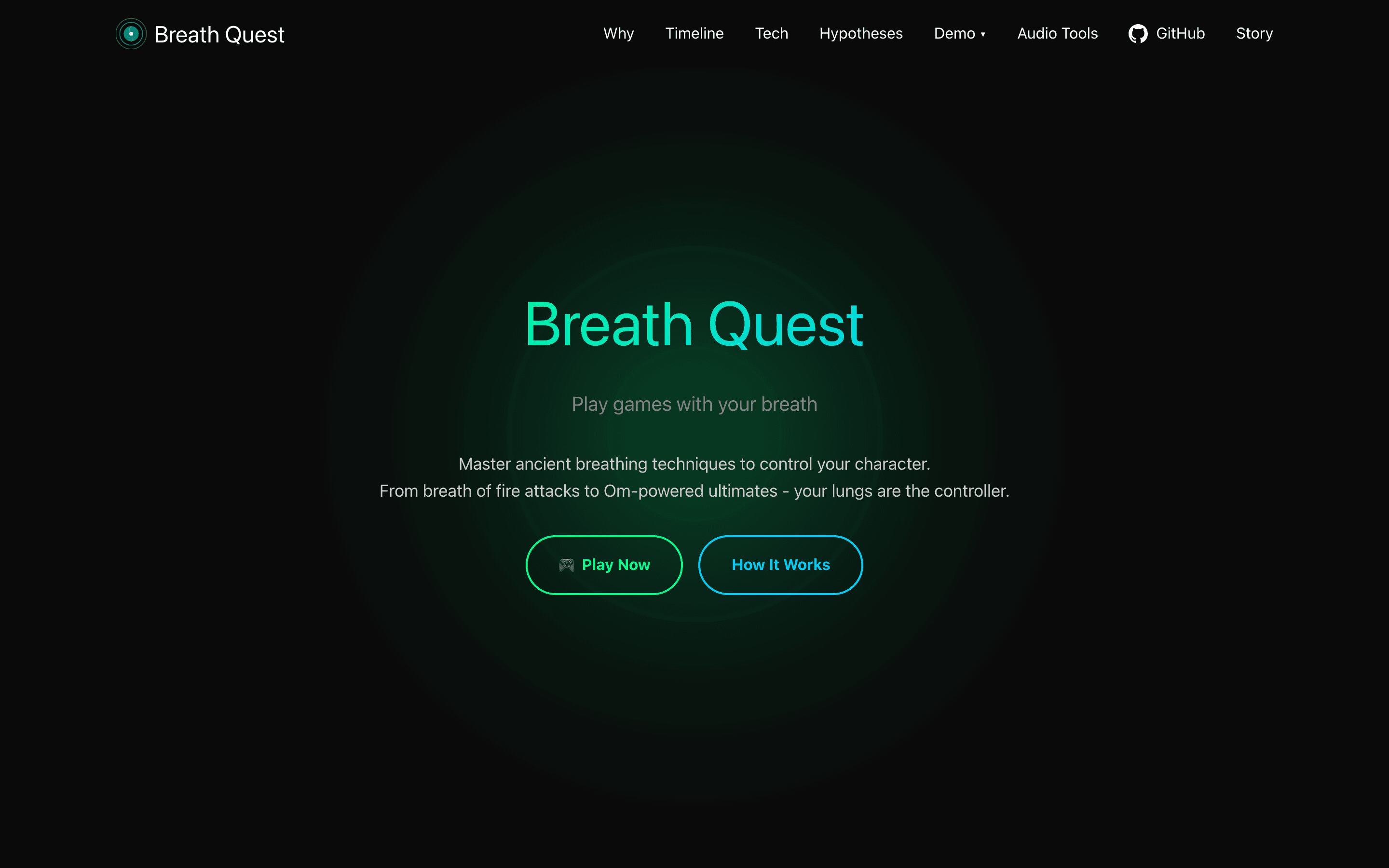
    Breath Quest experiment index
  2. 02

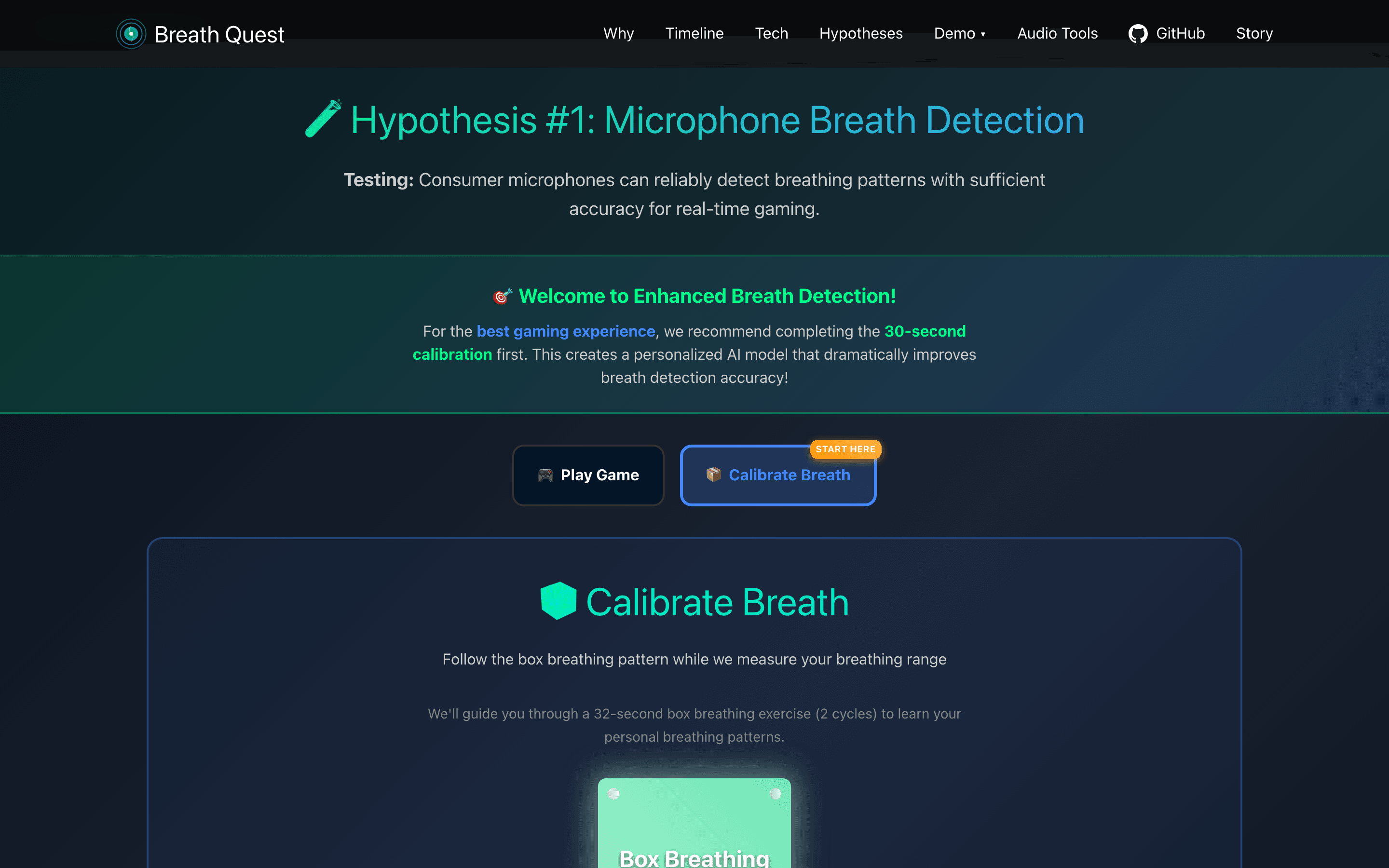
    Breath control begins with calibration

    Opened the breath-detection experiment.

    The real interface explains that personal microphone levels must be calibrated before gameplay; the dependency is visible, not hidden.

    /hypothesis-1
    /hypothesis-1
    Breath Quest breath-detection calibration surface
  3. 03

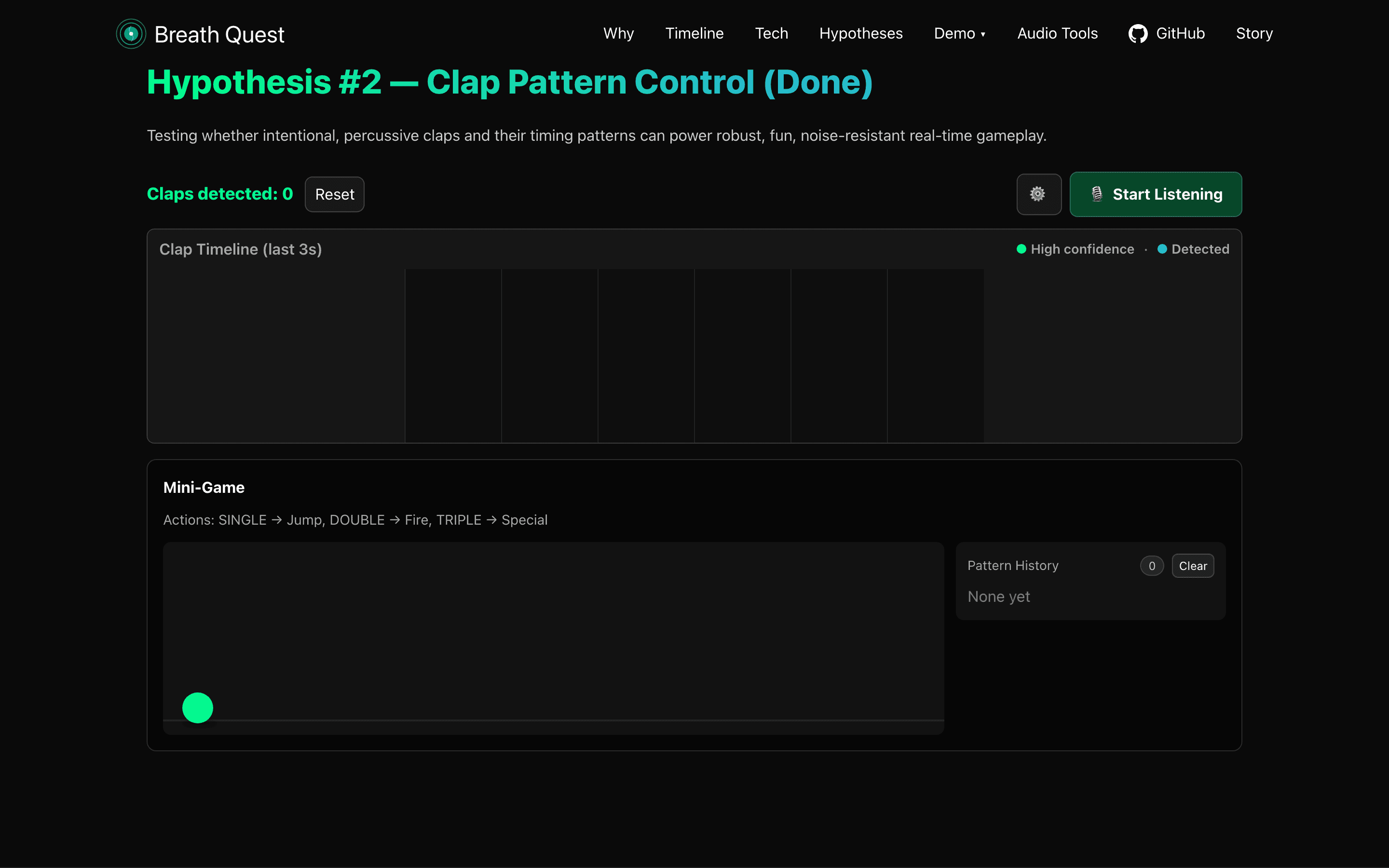
    Clap detection exposes its live controls

    Opened the clap-pattern experiment.

    Start/stop listening, detection counts, settings, timelines, and play feedback expose what the recognizer is doing.

    /hypothesis-2
    /hypothesis-2
    Breath Quest clap-pattern controls
  4. 04

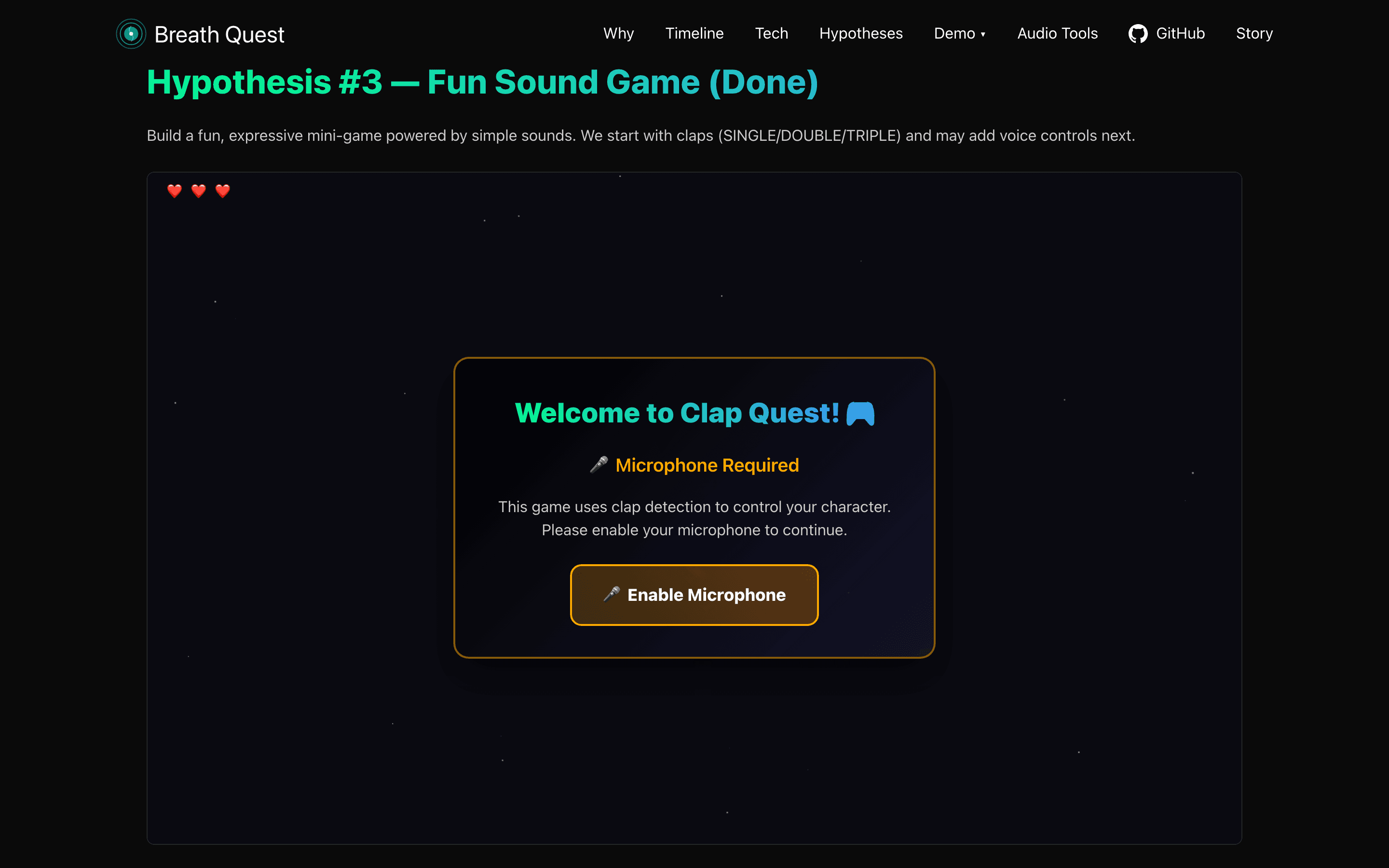
    The signal is tested in an actual game

    Opened the sound-controlled runner.

    The third hypothesis moves beyond meters into onboarding, lives, scoring, and a complete game loop controlled by sound.

    /hypothesis-3
    /hypothesis-3
    Breath Quest sound-controlled runner
  5. 05

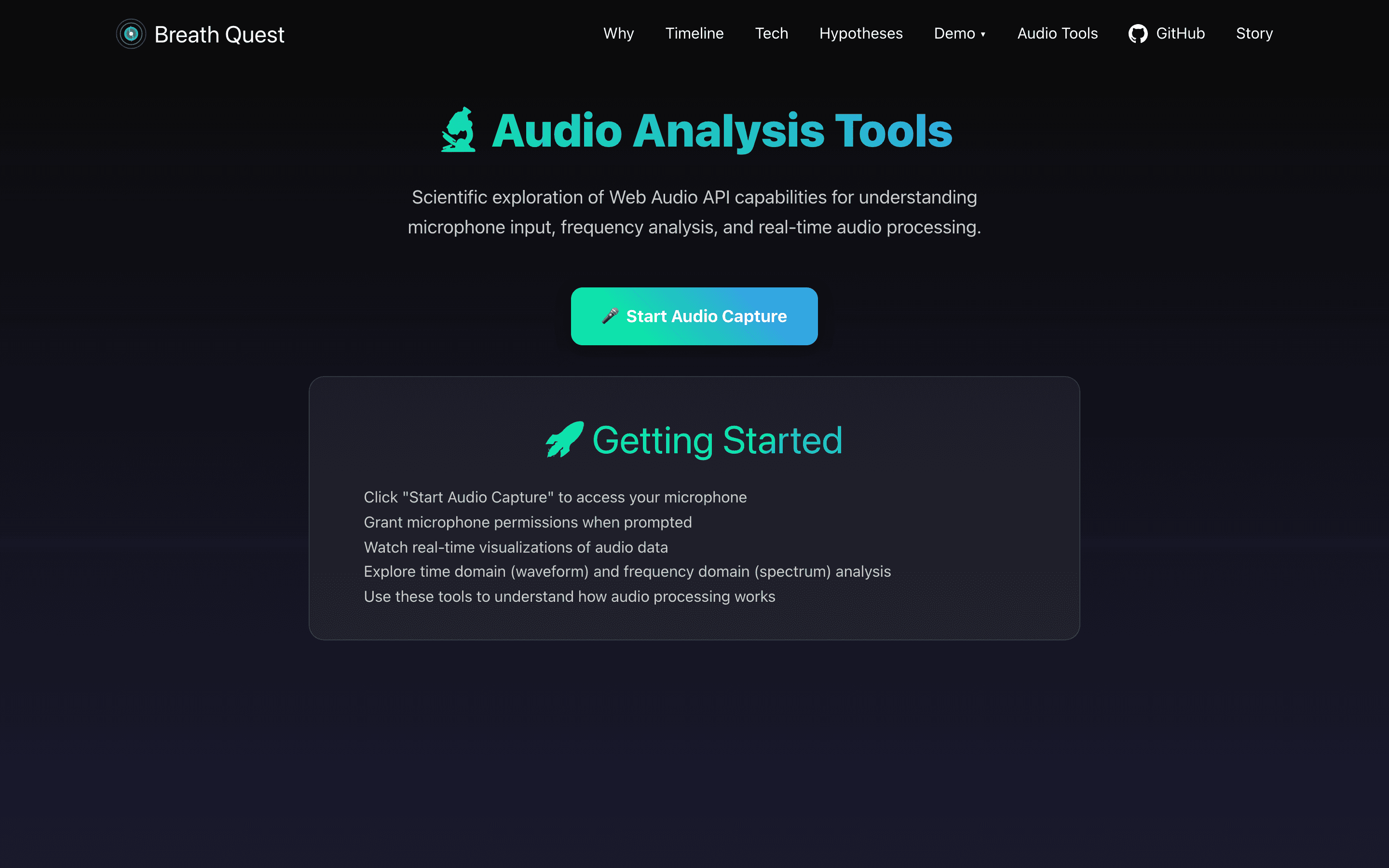
    The sensor can be inspected, not merely trusted

    Opened the audio analysis tools.

    Time-domain, frequency, envelope, and zero-crossing tools make the experimental signal visible to Noah before he treats it as a controller.

    /audio-tools
    /audio-tools
    Breath Quest audio analysis tools

What this feature does

  • Calibrate breath detection
  • Control with clap patterns
  • Play the sound-controlled game
  • Inspect live audio features